[00:00:00] Speaker A: You call that radio?
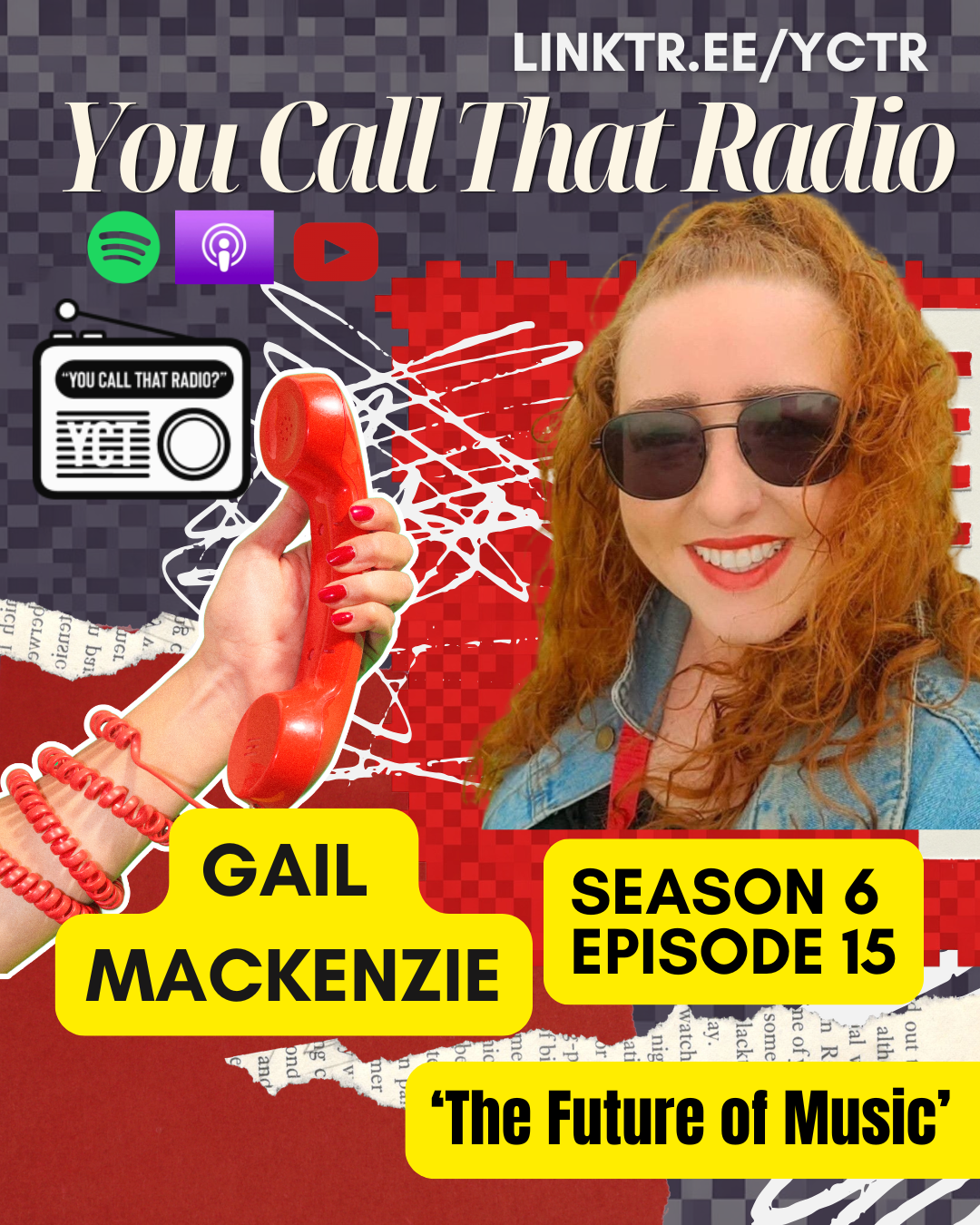
YCT Radio Season 6 Episode 15 YCT Radio or Y is proud to have no adverts thanks to the generosity of our
[email protected] youcall that radio. There's going to be no adverts today, but I would like to give a wee shout out to two Scottish tours on the go right now that we helped book.
One is Becky Wallace who's rolling into straving on the 8th of May. We'll be talking to Gil McKenzie today. We'll speak a little bit more about that later in the show and she'll share her wisdom about working behind the scenes the music industry, from things like Teeing the Park to Transmat and much, much more. Also shout outs to Jinx Lennon. We've booked Jinx Lennon's Scottish tour we which will take place on the 15th of May, the 16th of May and the 17th of May, Edinburgh, Sneaky Pete's Butte, the Anchor and McCool's Glasgow. So hopefully you will find Becky Wallace and Jinx Lennon.
Just check your local Internet ticket. I think it's. I think, I think they're both on schedule and I hope you enjoy the show with Gil McKenzie. It's a really interesting interview.
What really goes behind the scenes and the music industry and how.
What's the future of music going to be?
We're going to ask Gil McKenzie.
You are tuned into YCT.
As you call that radio.
It's our seventh birthday today, which I didn't know but seven years ago today we created the Facebook page and we interviewed the late great reverend D Wayne Love aka Jake Black from Alabama 3 at the Ice Box and that was the first ever time that we did a podcast.
So it's mad seven years and we just had Jinx Lennon on before and now that this hopefully we can get a new mic stand, hopefully get a new M stand. I. I'm delighted to welcome on to the show Gail McKenzie. How are you doing?
[00:02:24] Speaker B: I am doing very well, thank you. Mark, how are you?
[00:02:27] Speaker A: I'm good. I am in the the tropical ale of Invercus today and the. It's quite good that we're getting the shows done early. It was. It's not my. It's not normally how I would do a do shows. I like the evening but I've got the rest of the day to get on my bike and you know what? I bought a brand new bike lock yesterday and somebody stole my bike lock.
[00:02:55] Speaker B: I was about to say, you won't need that down there. Clearly you don't because they didn't take
[00:03:00] Speaker A: the bike, the bike lock, but left the bike. So it's a cunning criminal.
It just did a better crime for the love of the sport.
It was only 4. It was a 4.99 bike lock. So no, it's not ideal. You won't have your bait lock, at least for a day.
[00:03:19] Speaker B: Yeah, well, that's true. You never know, they might. They might just be borrowing it.
[00:03:24] Speaker A: Yeah, well, I'm gonna go back.
[00:03:26] Speaker B: It might return, but you'll probably bought another one by then.
[00:03:29] Speaker A: Well, I'm gonna go back to where it was just in case, because the other one is I've left it there. But true.
[00:03:34] Speaker B: You never know.
[00:03:36] Speaker A: But I did look everywhere. So anyway, it's great to have you on the show. We. We're.
We're. We. We met essentially. We just met quite recently.
Despite the fact that we had about a million friends in common, which is quite a good game if anyone doesn't know. If you meet somebody that you let. We probably should know each other. You just saw how many. Guess how many friends in common you've got in Facebook.
[00:03:59] Speaker B: That was the beginning of a beautiful friendship in the past.
[00:04:03] Speaker A: So. And it turned out with lots and. Yeah, so you've. Well, if you want to just introduce yourself just for people that maybe don't know you, girl, just what kind of things have you done and are doing?
[00:04:15] Speaker B: Yeah, sure. So I have worked in the music industry for quite a while.
I worked at DF concerts for about nine and a half years.
I worked on Tea in the park, which I absolutely loved. I became the Te Tea Lady King Huts, lots of gigs.
Transmat, Glasgow Summer Sessions.
But I was always involved in grassroots things as well because I liked. I like to see like people do well, you know, I like to help where I can.
So I might not be able to play a music, play an instrument, but I can get involved in whatever way I can. So, yeah, I just. I just. I just love it. It's great.
I've took a wee bit of time out, so I'm just kind of like on my way back. Oh, yes, There I am, the tea lady in her element.
[00:05:20] Speaker A: And there's the actual tea sign.
[00:05:23] Speaker B: Yes. That was a promo weekend.
The viewer involved and loads of other bands.
We went around the country.
That was fun.
[00:05:33] Speaker A: Yeah. I mean, for people that. People that don't know either. Maybe people that are too old or too young. Well, not too old, but old. Too old to go eating the park or too young to have been eating the park. I mean, it was just. It Was life changing for.
For my generation anyway. And I went. I think I went to. I think I went 10 in a row. I think. No, I went in 10 out of 11.
There was one year I missed after going every single year. I think either it sold it or I couldn't afford it or something. I can't remember. But there was one year I didn't go and I pure missed it. So yeah, the following year I worked behind. I worked in the bar. I did a bar shift because I think Eminem was playing that year. I think it was my 11th team the part intensity in the park and then. But yeah, it was a wee bit because everyone had always said that team the park was getting.
Oh, they were using what shape words I hate with Neddy and stuff like that.
[00:06:24] Speaker B: Yeah.
[00:06:25] Speaker A: And either. Either because I was in it or I don't know but I just enjoyed it and I didn't see that side at all.
[00:06:33] Speaker B: I didn't either. Like out of. I used to always go to Tea in the park amongst many other festivals as well across Scotland, you know, so there's so many. I loved rockness as well and I loved going to Wickerman and you know there's been. There's been such a collection of good festivals. It's always fun to do lots of different ones. But when I started I always had a goal to work for Tea in the park and I didn't like when it happened. It was great because I just loved it. I loved every moment of it. And I never saw anything like yes, mental in the Scotland sense of the word that you get every weekend but in a city center.
But I think all that happened is maybe just new next generation. Waves of generations came in. So sometimes suddenly people felt a wee bit maybe I don't like to say they felt too old because you're like they shouldn't. You should never. I don't think Tina park has somewhere you would ever feel too old to go. But that's the only thing I can really think of.
[00:07:30] Speaker A: Well, I think just. Well, this is my theory. This is just my anecdotal theory because obviously working from behind the bar being a bit more.
A bit more sober. So bad completely sober behind the bar. But you know, that way. But you. I was seeing it through different eyes I suppose and I think what happened was there was the rise of what. What you said mentioned there Wickerman Festival was saying you had Eden Happening as an offshoot. You had Audio soup, you had D.
Basically a lot of sort of smaller. I know Boutique. I hate that phrase. But boutique festivals.
[00:08:03] Speaker B: Yeah, well, yeah.
[00:08:04] Speaker A: And I think what I started to notice happen was is that the. The people that were my age or above started gravitating towards them a bit more. So feel like it was. It did become a young person, especially not that anyone's ever too old to go to the.
[00:08:18] Speaker B: I think at the very end especially like once it moved to Strath Allen, I. I felt like that was the. The last few years I noticed that it did feel younger and then obviously we developed Transmit, which you know, was simply because teen the park came to an end which was, you know, it was a sad time but like you say, teeing the park for many of us up, you know, it was a rite of passage.
If you're a music fan. I think everyone went at least once and would have enjoyed themselves.
I would say I'm a bit better on the least once, if not more.
And like you had such a variation of music and the lineups are phenomenal.
[00:09:01] Speaker A: When you look at the lineups and no, I mean there's no. I don't. There's no festivals touching it, I suppose.
[00:09:07] Speaker B: Yeah.
[00:09:07] Speaker A: Music industry's changed a lot, which we'll get into as well. So. Yeah, yeah, it's quite hot. Where are the. The stars that are. That are big names that are also good? You know, there is. Because there is different niches and pockets of great music happening absolutely everywhere in their own little algorithm, their own little bubble.
So you're not getting these. I mean, who was the last superstar band? Maybe Arctic Monkeys or something to be going that far back?
[00:09:34] Speaker B: Yeah, it's. It's difficult because I think I. I think what I noticed is in 2020, obviously there was lockdown and that's. It was difficult for everyone.
And then there was a real resurgence of like old school bands. Like, I felt like there was a lot of like really old school. Like, you know, I'm talking like Motley Crue Cass, like a lot of these. These old guys. Like, honestly, I went to them, it was fantastic.
And then Oasis obviously last year, you know, and they're all amazing bands, but it's like the Superpower bands are kind of doing the rounds again.
And it's hard right now.
The world is difficult for everyone and I think for musicians to cut through, it's even harder than it's ever been.
[00:10:26] Speaker A: The Flying Duck. And we found out yesterday the Flying Duck is closing its doors at the end of. At the end of May, right. Flying Duck shutting down. Another great venue gone.
And yeah, the problem seems to be that Just that people. I don't know. There's an argument that younger people aren't going out as much, but people are skin.
[00:10:49] Speaker B: Yeah. I think that's the main thing.
[00:10:52] Speaker A: It's like, how are you supposed to. You can't just socialize in the way that you used to. And then I feel sorry for the, the venues where they're trying to survive. So they're charging ridiculous amounts for paints just to, you know, not. Agreed. Just a survival. Yeah, yeah, it's, it's a tough time
[00:11:09] Speaker B: because, I mean, even if you decide not to drink, your pestle's gonna cost you these days too.
[00:11:14] Speaker A: Yes. We just said jinx. Lennon talking about the fuel crisis.
Yeah. Your transport's going to cost. And. Yeah, and also if you. That's. That was the saddest thing I learned when I was running a venue when I was young and I don't know, 2012, I was quite disheartened to learn that the music industry is built on drink alcohol sales, wet sales, as they call it in the trade.
[00:11:39] Speaker B: Yeah.
[00:11:40] Speaker A: And that, that was quite disheartening because I was like, you know, we put on this brilliant band, the place was sold and then the, you know, my bosses at the time, they were like, yeah, but your 200 hip hop fans didn't spend as much as the 40 SCA fans the night before. Yeah, SCA fans, they love us. Well, they'll, they'll, they'll, they'll read the bar. But I suppose for them, they, at the time they were sort of more middle, sort of middle aged. So that was their big night, catching up their pals and they were going for it. And they were probably not using alternative methods to enhance their evening, if that makes sense.
Well, younger people were skin and they were maybe, maybe sneaking in booze and doing things like that as well. So. Yeah, but I mean, people are drinking less, which is a good thing for society.
[00:12:35] Speaker B: It is a good thing. And like, I think we're probably a generation of, as I said, Florence would say, last of the big time drinkers.
[00:12:43] Speaker A: It does feel that, that. So that's good for health because obviously Scotland's got a massive drinking drug problem. But I don't know if they're. I don't actually know if the young people are switching to just drugs instead of drink. I don't know.
But that means. It was a big gap, though. How. Because the music industry was propelled by drink sales. And if people aren't drinking, well, people are drinking. This is that if. Either it's because of poverty or it's because of health reasons.
How do we fill that gap? Do you feel like there's the, the, the government or Creative Scotland or anyone should be. Is there anything they can do to fix us?
[00:13:21] Speaker B: You know, like, obviously, I think that's one part, one slice of the pie as such.
Because I don't think everyone's going, oh, I can't afford to drink because I'm not going out. I do agree, like a lot of folk, I think it's overall like, I think even like people will go and buy, go to buy a ticket for a gig that normally they would have just bought it off the cuff. Even myself, you know, I remember I used to just before I worked at df, at my previous job, anything that came out, including the park ticket, I was just like There at 9:00am, which, just off the cuff, buy four tickets.
I, I couldn't do that now.
You know, it's different, it's. People buy slower. People are less like. Because they're scared that if they buy tickets then people won't give them their money back. You know, it's a really vicious circle.
What could people do? Well, I mean, I think this is bigger than like the Scottish government, government side of things. I think it's, you know, unfortunately, it's a, it's a difficult situation that we're in a recession and we need again, again another recession.
[00:14:35] Speaker A: How many recessions are we going to have?
[00:14:37] Speaker B: I think I know in our lifetime.
[00:14:40] Speaker A: Yeah.
[00:14:42] Speaker B: And you know, it's that crucial thing of the government being able to give lend again so people can like lower prices, etc. So people can buy and you know, it's a difficult one.
[00:14:55] Speaker A: Let's make, let's make it, let's, let's stop moaning about it and let's make solutions. Okay, so what about if you go. If you pay for 35 gigs and you need a stamp or a, an email.
[00:15:08] Speaker B: Yeah.
[00:15:10] Speaker A: If you pay to go to 35 gigs in a year, you get free council tax. Zero council tax.
[00:15:18] Speaker B: That's cool. Yeah. I mean, you're asking me something I've not really thought about here.
[00:15:22] Speaker A: Oh, no, I just made that up. Just made it up. I just made it up. I'm just thinking. So people are. All the naysayers are like, you can't do that. But think about that. Most people would only get to about 10 gigs, then they would get bored of chasing the council tax, the, the tax breaks that comes with being a regular gig goer.
[00:15:41] Speaker B: Yeah.
[00:15:42] Speaker A: I don't think it would actually cost that much to Give the true fans no council tax.
[00:15:49] Speaker B: Yeah.
[00:15:50] Speaker A: Free gas and lekki.
[00:15:52] Speaker B: Yeah. I mean, that would go a long way, but I think. Yeah, I mean, it would be cool if there was a solution like that. And I, I don't know what it is, though.
[00:16:02] Speaker A: Always just keep trying. What about the venues?
So, you know, you get the small venues. The, the, the, the, the. The tend to the grassroots.
If they get a band and whether it's a singer, songwriter or a band or whatever, and they play to under 50 people.
[00:16:21] Speaker B: Yeah.
[00:16:22] Speaker A: Then within two years, that person placed over a thousand people.
The venue gets free gas and ley for a year.
[00:16:32] Speaker B: I mean, they, that. They would love that.
[00:16:34] Speaker A: They would. Of course they'd love it.
What is the odds of that happening? How much money would it cost to give one venue free gas and leki for the year just because they've actually got. They've made some talent.
[00:16:48] Speaker B: Yeah, I mean, actually, you could probably get like.
Like how? Our company. I mean, it's a different way of looking at sponsorship, isn't it?
You know, a lot of these people pay to be at Transmat and things like that to have naming rights to do a stage and stuff there. So maybe that's flipping it on its head. Rather than paying for a stage at a festival, pay towards a venue for a year.
[00:17:19] Speaker A: Yes, the sponsors.
[00:17:22] Speaker B: It actually works the same way, you know.
[00:17:27] Speaker A: Hydro.
Is that too controversial? What if. Because you're talking about the nostalgia bands. Shout outs to Oasis. I didn't, I didn't go. But I would have loved to have went to that.
[00:17:38] Speaker B: I tried my damnedest to go, but I, I. Unfortunately, I can't believe it. But I never got a ticket.
[00:17:43] Speaker A: I didn't try. I was waiting somebody. I was waiting on somebody magically saying, do you want a spare ticket? But I didn't.
[00:17:51] Speaker B: Oh, no. I. I tried so hard that I get scammed.
I know all the. And I know I used to be like, guys don't get scammed. Blah, blah, blah. I was. That. I was at Desperate. I was like, boom, here's my money.
[00:18:06] Speaker A: How. Where did you get scammed? This could maybe be a warning for other.
[00:18:09] Speaker B: You know what? It was very clever and something I hadn't seen before.
So my friend said, her friend is selling Oasis tickets.
So she had seen her friend's page and they were selling Oasis tickets and she said, here's her name. Lovely woman, just get in touch with her. So I could see that they were friends. So I had no reason to think anything negative or. Susan Private message star. All good? Yes. I'm a frat, I'm a friend of your friend, blah, blah, blah. And so it was, you know, our niece couldn't go anymore. Four tickets, they go quickly. Message people, you know, fine. They said, money.
[00:18:54] Speaker A: You want to go to Oasis? Yes.
[00:18:56] Speaker B: I mean it was probably the easiest like organization in the of the century. So got. Everyone said money. I sent it over and then I can't remember the way the conversation went, but I just.
There was something we. Oh, I had sent three quarters of the money. I think that's what it was. And then they were like chasing me for the last bit and I was like.
There was something. Something just clicked in my head.
And then I asked to phone them and they would give my phone number. And then I went back to my friend and asked for a phone number and then I went, oh, I've been blocked.
And she was like, I don't understand. Like, that's my friend.
So it turns out after phoned at the bank, I got my money back.
So someone had cloned her Facebook page and I didn't know that you could do that.
So it's basically like a mirror image. I don't know technically how it works.
[00:20:00] Speaker A: Yeah, no, no. I don't know technically there. But I'm. I've seen.
[00:20:03] Speaker B: It's like imprinting almost over her actual page, so. So that all our friends still see it. I mean, it's exactly, exactly. There was not. So everyone thinks they're talking to that person.
[00:20:15] Speaker A: It just happened. It happens quite. I've got. I've got friends that do have multiple pages. They get locked out their account or whatever and then you just think that they've got a new. New account. So they've actually done that and then they've just picked Oasis, OASIS Week to do it.
[00:20:31] Speaker B: And then probably did a kind of shared post as well, just to give it a wee bit more authenticity, like. So they might have cloned a few pages, I don't know.
But it was like my niece is selling a ticket shared.
So it's almost like layers of a
[00:20:49] Speaker A: fake pages and it's gonna.
There's gonna be some interesting scams coming down the. Down the tubes with AI. So you're basically. You're going to have people's voice cloned.
You could actually phone that person and it's actually the person's voice or.
So we're all going to need to have code words to talk to people. Yeah, it's like confirm the code word before you speak to me. Yeah, I want to go back to the ban. The hydro I don't mean ban the hydro, by the way. That was. That was. That was a bit much. I mean, I think what I'm getting at is the amount of people that. Because obviously people were buying Oasis tickets off. Oasis are a good example of this. A lot of people were buying off. They weren't getting scammed. We're still getting scammed by the. Is it via Go Go or. Or whatever the. These kind of people.
[00:21:35] Speaker B: Yeah. So that's the other thing that I think's really unfair is like, you know, this percentage thing, like if a gig's popular, the ticket price, I think that's. That's completely like.
[00:21:48] Speaker A: It's called again. What's it called again there? A nice. There's a pricing mark pricing.
Ticket master pricing. Hold on. It's ticket master. Ticket master pricing controversy. Let's see what it's called again.
Dynamic pricing. Such a dynamic dynamic.
[00:22:10] Speaker B: So when it goes up, they get more money.
[00:22:13] Speaker A: Well, the thing that we should be worried about is dynamic pricing of food.
Like, I feel like, you know, having all the. The loyalty cards.
[00:22:23] Speaker B: Yeah.
[00:22:24] Speaker A: So this is just a. A working theory, but that. See, if you're the kind of person that buys, I don't know, a jar of honey every week, I just turn in my coffee. So honey's in my head. If you enjoy. I don't. I don't go through jar of honey a week. Don't worry. But if you have a jar of honey every week and say ASDA knows that you buy a jar of honey every week regardless, Dynamic pricing, that three quid for the two pound jar because you're going to buy it anyway because the lag loves honey. He's buying that three quid. Ne bother somebody that doesn't buy honey picks it up and it goes 50p. Special offer, mate. Firsttime buyer, get your cheap honey. Let's get you.
[00:23:05] Speaker B: Yeah.
[00:23:05] Speaker A: Must get you hooked on the beeswax.
And so, yeah, dynamic PR is a bad model and it should. We. We should be against it in all forms.
Sorry, sorry.
[00:23:17] Speaker B: I was just gonna say, like, the good thing is it did bring a debate about. Amongst musicians themselves. You know, I remember a few people, you know, calling Oasis out because obviously Noel and Liam said they knew nothing about it. And a few people saying, if you didn't know, I think it was guys from the Cure, if you didn't know anything about it, basically you don't have a clue about your own business and, and understand your manager or you're stupid because obviously you're going to have that conversation of A, you know, how. How you're going on sale, what the ticket prices are, all that kind of thing.
And, you know, there was a good few people made a stand about keeping their prices a certain. Certain level, and I think that's fantastic. But I also do understand that at a lower level, some people have to sell at a certain price, you know, And I'm not saying they would do dynamic pricing, but pricing is completely unfair. It prices people out the market, it stops fans from being able to attend gags.
And it could possibly cause debt problems
[00:24:30] Speaker A: because if clan people are buying it in Klano.
[00:24:35] Speaker B: Yeah. Like, see, with Oasis, like, folk were so desperate to go and some people even get scammed, But, you know, they were paying through the nose for tickets.
And then there's probably, you know, you add everything onto that. Travel, maybe accommodation, a food, drink, whatever, and they probably did have the time of their lives.
But then it's a bit like that Christmas thing when people hit January. Like, a lot of it's a difficult time.
[00:25:09] Speaker A: People are still paying off last year's tickets, no doubt. And this is the point I was made by that. I don't mean ban the hydro bit. The point is that these expensive tickets, that. These are people that obviously love the Oasis. And how many gigs have they not went to the.
Because the skin. So they've had to take in their belt.
[00:25:30] Speaker B: Yeah.
[00:25:30] Speaker A: Struggling with gas lackey, food prices. They can't justify going a, you know, a 10 or so, because that's going to maybe end up costing them 60 quid or whatever or more, and depending what they do with the night. So. Yeah. So what I think is maybe Oasis. So bands like Oasis, this is obviously never going to happen. And it's a wee bit. I.
Authoritarian. Authoritarian. But Oasis, you're allowed your comeback tour once and then you got to wait 10 years and you've just. You can just. These nostalgia bands that are charging 100, 200 pounds at stadiums, they can't do it. You can't just keep doing it because you're just ruining. You're ruining the. The grassroots scene. Actually. It's a bit harsh, I know.
[00:26:16] Speaker B: Yeah. Well, maybe some. But like, I went see ACDC last year, Murrayfield, and I'm sure the ticket was 80 quid. 85 quid. It wasn't that. It wasn't. It wasn't what you'd expect. It was. It was a decent price.
[00:26:32] Speaker A: I paid 85 quid once, apart for festivals. 85 quid for Kendrick Lamar, the hydro. And that was actually good. I enjoyed that. That was but it was. I was in this. I was in the. I was in the seats.
But I had a. I had a really big.
It was a big budget on the lighting and there was loads of dancers and it felt like a. I felt like a theater show, I suppose.
[00:26:58] Speaker B: Oh, yeah.
[00:26:59] Speaker A: So I enjoyed that then. I've seen Idols. I got a ticket for Idols and I think that was the same price. And I like Idols, but I just felt like it was just the band name behind them. And I feel like. I don't know, for a punk, DIY sort of band, I was a wee bit disappointed with that. But yeah, you can't. Okay. You can't ban. So we'll say Mechanic. Ban ACDC from playing Bodyfield two years in a row.
[00:27:23] Speaker B: Yeah. I don't think we can put a ban on music. That's not fair.
[00:27:26] Speaker A: Ban the successful artists.
I'm just trying to.
I just feel like I'm moaning all the time rather than trying to find solutions. So I was just. Okay.
[00:27:40] Speaker B: No, I know. I think.
I think that's it. It's tried. And I think like everyone, Everyone's. Everyone wants to just help people as much as possible in life just now, if you've got good people around you, I've noticed.
What I have noticed in a positive manner is like real community around friends and a.
Just generally if someone's like, oh, you stuck for that, I can help with that, you know, and return to the. I think if you've got that. That kind of can go into any element of life, including like working life, music, etc.
I don't. I can't quite say how. How to do it, but like a.
Yeah, I think it's just.
There's an. Everyone's getting empathy for. Well, maybe not everyone because some people are. But you know, if you've got good people around you.
I've really noticed like the difference in the last year of the support and just, you know, it doesn't need to be like. Because they bought you something or whatever. The emotional support and just people being there for each other, you know.
[00:28:55] Speaker A: Absolutely. It's the, the problem, I suppose, to change it a little bit.
The, The. The times have changed regardless.
[00:29:08] Speaker B: Yeah.
[00:29:09] Speaker A: We can't live in the old days.
The. The big bands are. The big super bands are probably not coming back again.
There's got to be a middle ground. Is it. Do you think it's fair what they're doing? Those are maybe like the.
I don't know if it's stadium tax, but the big gigs are paying a pound goes into grassroots. But I suppose the problem I've got with that is who it's going back to grassroot venues.
Who decides what's a grassroot venue? How is it divvied up is my question. Have you heard about this?
[00:29:41] Speaker B: I think I've heard it, but I don't know enough about it because again, it's like, you know, it's there, but where it goes and how it works and how much people get like, I don't know.
[00:29:52] Speaker A: Yeah, it could probably go in, probably fill out forms. It probably goes back to.
Hugh says artists can go tax free in Ireland. Yes. So this is a good thing. I think the SNP afforded the idea for the.
The elections next month as well, a universal basic income for artists, which is obviously a great idea. I have had a few critics saying that in Ireland it's only going to the sort of. The privileged few, which, like, in the same way that the privileged few tend to get funding and things like that. Because I suppose the problem you've got is there's got to be some sort of barrier to prove that you're an artist, which is shite, but something. Because if everyone just says that an artist.
In fact, I'm fine with that. If everybody says they're an artist, everybody gets universal basic income. Because I think now the robots are taking our jobs and everything's getting expensive. Just give everybody universal basic income.
[00:30:53] Speaker B: Yeah.
[00:30:55] Speaker A: Of how much money you make. Just everybody gets X amount to cover your living costs and then you can still be an entrepreneur. You can still.
Because you don't worry about. You don't worry about the stress of. Of just eating food and you're eating. And the only argument I hear against it is some people going, but what if they play the Xbox all day? I'm fine with that. I don't care if someone plays the Xbox all day. I would rather they did that than mug me or steal my bike.
[00:31:29] Speaker B: I think it's still being creative and away. You know, maybe they're building up to be a super, super gamer. Not my world.
[00:31:39] Speaker A: I've been. I've been sober from football manager games for 20 years.
I've not played, I've not touched a PlayStation Xbox and well, nearly 20 years. At least 18 years because.
But yeah, Jigsaw Tigers in the Jigsaw Tiger says I. The Cure found about it happening to the tickets and they got people refunded for the inflated amounts.
Shout out to the Cure. Yeah, the Cure did do something about it.
[00:32:05] Speaker B: Yeah.
[00:32:06] Speaker A: Oasis. I think Oasis just went, ah, dynamic pricing we didn't know about that. We'll look into it.
But obviously the. When you've got artists at that scale, they've got a team that makes decisions for them and their job is to make them as much money as possible.
[00:32:24] Speaker B: Yeah.
[00:32:24] Speaker A: And there's such a degree of separation that they can just claim ignorance to it, whether they know about it. They might not even know about it. All they know is they've agreed a deal. I think they were agreed a flat fee of, say, 30 million quid each if they brought up.
[00:32:37] Speaker B: And then the, you know, there's part of me. And maybe it's just because of such a big. Does think they might not have known because there's the. Well, there's such a big team around them and the team will be making sure they get paid and then they'll have all these other costs.
[00:32:57] Speaker A: Liam Gallagher's not reading the small print and, And I probably a 300 page legal document also.
[00:33:03] Speaker B: You know, you know, they're very, they're very vocal in their honesty. I, I mean, like, Nose turned around and said, yeah, like, so what if that's the same as that fucking Beatles song. I copied it. And you know what? People bought it and will come to my gigs and they'll continue to buy it. So it. And that's their kind of honesty.
[00:33:29] Speaker A: Did say, stop moaning about it.
Yeah, yeah.
[00:33:32] Speaker B: And then, and then he called out Edinburgh's council as well, which was quite amusing.
[00:33:36] Speaker A: Yeah.
I think he called the Edinburgh Council ugly bastards or something.
[00:33:41] Speaker B: Yeah, yeah.
[00:33:42] Speaker A: Because they brought, they brought. There was a bit of. There was an element of snobbery there where people were saying, why is Oasis fans happening at the fringe? But, I mean, it was, it was a, it was a logistical nightmare. But that's not Oasis's fault.
[00:33:54] Speaker B: It's because the, the, the, the, the, the stereotyped racist fans in a negative way and obviously that's not very nice. But, you know, I was all fine. I don't think there's any trouble. A lot of love.
[00:34:12] Speaker A: I. Thank you. I think you went fine.
Everybody seemed to have a good time. The only incident I heard was my, My friend Stephen. I won't say surname because I know that he watches the show sometimes. He. He was sick on a train and so that's all I heard.
That's.
[00:34:27] Speaker B: I think. I think I heard more happenings on a Saturday night in Rossi one time than I did.
[00:34:37] Speaker A: You told me a story about Rossi somebody getting barred for.
Why did they get barred for the pub?
I'll let you tell the story but context we had on the show last week, we're talking about a woman, an American, obviously American woman who went on a booze cruise and then sued the booze cruise for selling her booze. You can hear about it on Views from the CEO audio podcast. And you call that radio. And then you told me this.
[00:35:02] Speaker B: So basically, the local pub that we post rank in and Port Barrington barred someone I know for buying too many drinks to everyone in the pub because someone got too drunk, therefore they barred the person who bought all the drinks. So you've got.
[00:35:26] Speaker A: You've got some legend walking a bit going, the drinks are on me.
[00:35:29] Speaker B: And he has an absolute legend as well, you know.
[00:35:32] Speaker A: I do. Right, well, don't listen on him.
[00:35:36] Speaker B: No, I'm not going to. But
[00:35:40] Speaker A: they still banned.
No, no, the band was lifted.
[00:35:44] Speaker B: The band was lifted. So he spent too much money in the pub. How very dare. Hey. No, it was. Because apparently it actually was. It was to do with someone being too drunk and.
[00:35:55] Speaker A: Well, that's true.
[00:35:56] Speaker B: I don't get it. I don't get it. I don't get it at all. But it's quite a funny story.
[00:36:00] Speaker A: Well, do you know what? Shout outs to the bar staff, they've got to make sure everyone drinks responsibly and we believe in that here too.
Drink responsibly.
Let's go into your career a bit. So you want the df, you're teen. The park. So it's quite interesting for me because obviously I've not.
I've never really worked at that. The big side of things. The sort of more sort of commercially successful side of things.
What. What kind of. What kind of. How many? Tell us what the background's like. What is it like working an event that size? Because obviously I've worked at those events, but I was either, yeah, a lot of packer or a.
[00:36:46] Speaker B: You worked in tea in the park, you worked all year round.
You didn't stop working on it.
There was always something.
See the end of day. So it was 85, 000 people per day at Tea in the park, which was bigger than any city center in Scotland. So you have got a city and it's essentially a Saturday night city center and everyone boozing and having fun.
So, you know, you've got that element of making sure you've got all the facilities and everything for the people, then you've got the entertainment, obviously the musicians, the different stages you've got. The BBC were involved, you had all the sponsorship deals. So I worked on all the sponsorship deals as well. Working with, like, tenants who. Well, tenants were founding partner.
They were the tea in Tea in the Park. So, you know, without them, it was blended together. But then you had all these levels of, you know, people want to command and, like, what. What was important to us, you know, say. We say, like, Cracking Robin came on board one year and, like, what was important to us is we didn't want to just like, say, yeah, we'll put your name on stuff. It was like, what do you want to do? What does your brand stand for?
Like, sometimes you had to feed them ideas. Like, there was a lot of cool chats that I would be having to try and bring extra elements to the festival. So for them, they weren't sure. And we said, look what. There's this cool place called the Sub Club in Glasgow and we've got. We've got the slam tent. But we'd really love to have the Sub Club on board because, you know, we all know each other and love each other. So we said we could do a really cool tent for you guys. Dark and moody, like the rum. And they loved it. They did that for a couple of years. And so, you know, it's not just, you know, the forefront. You just think of like the main stage, the, you know, Radio 1 stage, all this kind of stuff. King Touch stage.
[00:38:54] Speaker A: Is it true. Is it true that the spirit.
Am I remembering this rightly? But I can remember when I was really. Because I was. I think I was 15, the first in the park community.
Was it true that there was. You weren't allowed spirits for the first couple years?
Because I remember it just being pints of beer or cider. And then as time went on, I remember exactly what you're talking about. I can't remember off the top of my head, but maybe there was like a SM off ice, like a dance, basically.
[00:39:20] Speaker B: I mean, I didn't work, obviously, the early tea in the parks, but certainly when I worked there, just because of contractual elements with tenants, your bars would have sold when you and I went. It would have been a pint of tenants, a pint of cider, which would have been Magnus under the tenants group, and wine, I believe, and water and things like that, but no spirits. So to have a spirit company, it would have to be basically one spirit only like one brand.
And so essentially they kind of had to do an activation if they wanted to sell their booze, because that's how they. They would get a bar because we couldn't put it on the. The tenants bars.
[00:40:14] Speaker A: Interesting.
[00:40:15] Speaker B: Fair enough. You know, that, that's how tenants protected their sales. Let's go back to the. The booze sales again. So I apologize because my hay fever is killing me the last few days, so I'm feeling really like eyes water and everything.
[00:40:32] Speaker A: You're taking. So you. You also went on to. To do some management. Let's just talk about that briefly. I won't keep you that long.
[00:40:40] Speaker B: Sorry. I was also going to say that. That I feel like I kind of jumped all over the place there because, like, I mean, I was marketing ad sponsorship manager, so I had to. I had to tell everyone, like, anything that went out there about Tina park, any announcements. And you know, that that was part of my job with the team.
And it can be quite complicated with that amount of artists because, you know, you talk every manager, every agent, you know, and, like, the timings and trying to make sure, like, there's a nice burst of announcements. And then beyond, there's just so many. There's so much information to get out there. So, like, it's all that communication that was worked on as well as promoting the park.
[00:41:27] Speaker A: What about the nightmare that is? I can't even imagine anybody's for Team Apartment, but I've worked with enough festivals to know they were trying to announce it, but people were like, no, my band's bigger than that. They want the name in bigger. Right? The lineup is really important.
[00:41:44] Speaker B: Yeah, I mean, that was a headache. I mean, Jeff.
Jeff had to do that and I. I could not.
The amount of the changes that came with that was insane because what would happen is, like, it'd be different sizes and this and that and, you know, then once it went back, someone would be like, oh, wait a minute, now they're bigger than me, and I think they're bigger than them and blah, blah, blah. So, I mean, Jeff had to have the conversations, but, like, we would then get the changes for the artwork.
And yeah, yeah, it was mad, but it was all worth it in the end. And like, even at the. Over the weekend, you know, it was long shifts, but it was, it was fun.
And, you know, you had people like myself and my fellow gingers out there will understand on, even on days like today, you can very easily burn and you know, like, you're out. Say, for example, I get a photographer. We're out in the campsite. It's fancy dress Friday. We're getting. We're. We're getting content. We're, you know, we're. We're having fun.
It was sunny, slight breeze. I had no idea I was getting burned.
The funny Thing about that day was I got sunstroke. And later on in the day, the slam tent flooded.
So people had forgot. It was even sunny earlier in the day. And I was sitting in the Porter cabin, bright red. I don't feel too good. Slam tents flooded because the rain just came on and people are like, I'm sorry, sunstroke. I was like, it was sunny earlier today.
So, yeah, lots of funny stories just from a. I mean, I could. I could write a book, as you see.
[00:43:31] Speaker A: Yeah, write the book, Write the book. And then you went into management.
[00:43:35] Speaker B: Well, that was kind of along the same time. Well, actually, do you know what? It was slightly before.
Sorry, two seconds.
I hate Fever's actually killing me.
Before I actually started at df, I managed a band called the Black Rats. Or it maybe went into. When I started there. But, yeah, I'm certainly doing music things before I started.
Black Rats are from Shaven and where I live and Shaven's got lots, Lots of. Lots of acts for a small town. Lots of cool, cool people involved in music.
God, I feel as though if I last them. I missed someone out. Like there was the Pat Saddy Boys, obviously, Colin Keenan.
Some people have even moved to Straven.
But anyway, yeah, the boys. The boys were great to work with, really rocky sound. And we kind of gagged around for a good few years till, you know, if anything, it wasn't. They're all still best mates. They just started having families and in fact, they've all just got back together and reunited as the Buffalo Men. So that's quite cool.
So, yeah, I've done a bit of artist management and then I enjoyed it because I liked that. The kind of. The other side. I just love organizing things and, you know, that kind of more grassroots side.
And then I met Jerry Cinnamon at King Tups and we. I ended up managing him for four and a half. Four and a half years, roughly, which was, you know, it was a whirlwind of a time.
[00:45:14] Speaker A: That's. That's from.
That would have been when he was stalled in the Priory. Right up to. Yeah, yeah, kind of thing.
[00:45:22] Speaker B: Yeah, right up to the bars. Yeah. And shout out to Jokey, who was also part of. Part of that crew, Carly Corner, you know, the Denon mob. As we always said, it was a great time. You know, the Priory was just. It was like.
It was like a wee, you know, our club.
And it was just. It was fun. It was great. Everyone was really, you know, going for it and. And helping and, you know, pushing people to. To get to the next level and you know, even helping some. Some of the guys there. You know, like Carly, when she came first back from London, she had gigged in a while and I wouldn't say a manager, she's my pal but like a we, I helped her. And again, Stephen McCrory very kindly let Cali on his support to get her back into things. And then again, Kylie was then selling out King Tuts and you know, doing all her new stuff. So yeah, there's always been a kind of a artist management slash helping people there and I enjoy it. It's good. I like. I like to. I like that side of things too.
[00:46:31] Speaker A: And you, you've just recently returned to the home of Stan?
[00:46:35] Speaker B: I sure have. After a st living in the is of Butte, which was fantastic.
I'm back in Straving.
[00:46:43] Speaker A: Back in Straving and back in the sh.
We everywhere's back in the Shire these days. I. I consider a sh to be the true shire, but I.
[00:46:53] Speaker B: Everyone's got the like. It's like, it's here, it's here.
[00:47:00] Speaker A: So obviously we helped Becky book this rural tour and you're kindly helping out with the streaming side of things.
Absolutely. She's got an incredible band where it's like a super grip that's going to be backing her up. The. The other pool gag went amazing last week. It's Straving. The Old Town Old Town Millers at Shaven Town Mill, am I calling it?
[00:47:22] Speaker B: Well, we, we used to do, you know, what people call different things. I don't know what's like.
The Old Mill is essentially what it is, the Town Mill. Streaming Town Mill. That's what people know it as.
And there's. There's a nice wee link there as well. One of my best friends from school, Marshall Craig Mill, he used to run the recording studios there. So many a band will know Marshall as well because the Old Mill is just. It's amazing. It's so full of character. You know, it's like stepping into a castle, you know, the old stone walls.
It's on different levels. The recording was down the stairs. You have to get the stage in the middle level theater seats.
It's got such a character to it and everyone would love recording there. You know, I've recorded there with bands that other people I know. Marshall was fantastic.
The only reason he's not there is because he fell in love and moved to America.
But we all still keep in touch with them.
He actually saw we were doing this, got in touch and was like, wish I was. Wish I was doing something with you guys to help Marshall helped many of us back in the day. And then we've got the lovely Callum Frame as well, who's support. And also a local shaven boy.
Again, one of you know, known Calum for years. And Calum just very excitingly started his new.
A new venture where, you know, Riddle, as he's known.
So he's got his new tunes that a lot of people shaven wouldn't have heard or anyone actually. Sorry, I'm saying stream because I know how many people know and love them.
So. Yeah, this is gonna be good. It's gonna be fun. I'm looking forward to it.
[00:49:05] Speaker A: Yeah. And it's the. There is tickets available on schedule for it right now. I'm trying to find the flyer for it and here is it. That's. Yeah. Okay, I'll get in a second. Yeah. So the tickets are available on schedule just now. Callum Frame, which new project? Riddle and Becky Wallace. And that's the eighth Ma.
And we'll just. Just put up one of the pictures. It looks amazing. And yeah, it's a cracking venue.
[00:49:33] Speaker B: It is. It's cool.
[00:49:35] Speaker A: Sounds good.
Asking about age restrictions. So understand this. It's. Any age is always welcome. It's just that the weeds have got to stay away from.
[00:49:45] Speaker B: Yeah. So the way that Mama can do this is basically the bars in a separate room. It's actually on a separate level. It's weird. The mill goes down like that.
So. Yeah, I don't know of many.
You know, if you want to bring the way you can, you just can't take them into the bar section. So.
But hope to see lots of people there. I know like lots. There's a lot of interest. Draven's, you know, a lot. A lot of good musical people and backgrounds are into their music.
So I. I hope they'll be there because the.
There's a lot of. Thank. There's a ticket link.
[00:50:22] Speaker A: Sure.
[00:50:24] Speaker B: I think it'll be fun. I think it'll be nice to even just like reconnect with people because I'm back. I'm back in shaving and I want to see folks. So it'll be a great night.
[00:50:35] Speaker A: Yeah, I'm. I'm tempted. I'm tempted to go.
I actually might be able to go.
I'm going to be about half an hour away the day after.
So I may be able to do both as long as I behave myself with Stravan.
But I think I might. I think I might make it.
[00:50:53] Speaker B: You hang about with. After the Gig.
[00:50:55] Speaker A: Depends. Depends.
You know what? I've only ever been. I've been striving.
I think I've been once I was a Christmas dinner, I'm straving and I tried to get home and it was. It was a Sunday service thing going on. I think it was boxing.
[00:51:13] Speaker B: It's. It's. It's difficult to get. However, there's a lot.
[00:51:17] Speaker A: Does it sound right? I had to get. I had to go east. Cool. Bride or something.
[00:51:21] Speaker B: There's no change. So like. But the good thing is now there is actually.
I was gonna say double decker. It's not a double decker. A coach called the 3C. So it runs daily apart from a Sunday.
Just. It just goes direct from Glasgow to Shaven and it's something that we've always needed, which is fantastic.
But yeah, it's people.
[00:51:46] Speaker A: Somebody could come out for a day. That's in Glasgow. That goes here. I fancy seeing that beautiful old town. Mill.
[00:51:52] Speaker B: I thought you were going to say Gail, but okay.
[00:51:55] Speaker A: The G and Gil. Gil's. Gil's comeback party.
[00:52:03] Speaker B: Well, no, sorry, it doesn't work that way. The bus. Cuz unfortunately it. The last one is like eight o'. Clock. I'm just saying it's good for. For getting into shaving.
[00:52:12] Speaker A: So you're still. If you're want to travel, you're shaving
[00:52:14] Speaker B: for the night, you get the bus there and then a taxi back or
[00:52:18] Speaker A: a, an Airbnb or a hotel. Treat yourselves or get in touch.
[00:52:21] Speaker B: I'll see how many people I can host.
[00:52:23] Speaker A: Yeah, absolutely. So the, the. What's. What you hoping for the year ahead then? Are you working with some bands? Are you bringing more acts to Straven? Are you going to see how this goes first?
[00:52:39] Speaker B: Well, I see the minute I start working on things like this, I just love it. So I have already been talking to another artist who's interested in working with me, so see what happens there.
And yeah, I mean like, I hope it goes. I want this to go well because if it does, then I will continue to do gigs in streaming and elsewhere.
You know, we're. I'm happy to look at tours for people but essentially from a shaving point of view, we've got good venues and I'd love to get. I'd love to get more people and just love to get those tours going and like help people get, get themselves out there.
[00:53:20] Speaker A: Amazing. Well, it's been brilliant talking to you. I know it's a sunny day so I'm going to let you get your hay fever medication.
I'm gonna get the sun cream on as well. My lighting's not.
I'm a much burnt than the lighting suggests, but it's too nice. It's too nice to be in the. In here. I did play. I did toy with the idea of trying to do an outdoor stream, but,
[00:53:45] Speaker B: you know, I thought about that and then I thought the hay fever is just gonna be. I do have my windows open, which probably doesn't help, but it's too warm.
[00:53:53] Speaker A: It's too warm.
Still want to be under the studio lights, but we're going to. Yeah, we'll wrap it up this time. It's been great talking to you and hope. I hope the gig goes well. I might. I might just make it long because I did do the mass. I'm half an hour away the following day, so I might be able to just.
[00:54:09] Speaker B: I give my shirt. We'll work it out.
[00:54:11] Speaker A: It's just a good night. The Old Town. The Town Mill looks amazing. Becky Wallace, Callum Frame, AKA Riddle. And yeah, great to chat, Gail. We'll hopefully see you soon.
[00:54:23] Speaker B: Yes, excellent. Thank you, Mark. Enjoy the sun.
[00:54:26] Speaker A: You too.
Thanks to everyone who's tuned in. It's a seven. We're seven years old today. Thanks to the patrons who make this show happen. There's also a brand new audio podcast out today called Views from the Sea on. You call that radio. And if you missed Jinx Lennon's interview earlier on, go and check that out. He's an absolute legend and he's doing a Scottish tour in Edinburgh, Butte and Glasgow the 15th, 16th and 17th of May. Thank you very much, Gail. Enjoy the sun.
[00:54:52] Speaker B: You too. See you later, Mark. Speak soon.
[00:54:54] Speaker A: Bye.
[00:54:56] Speaker B: Thank you. Bye.