Episode Transcript
[00:00:00] Speaker A: You call that radio? 3, 2, 1.
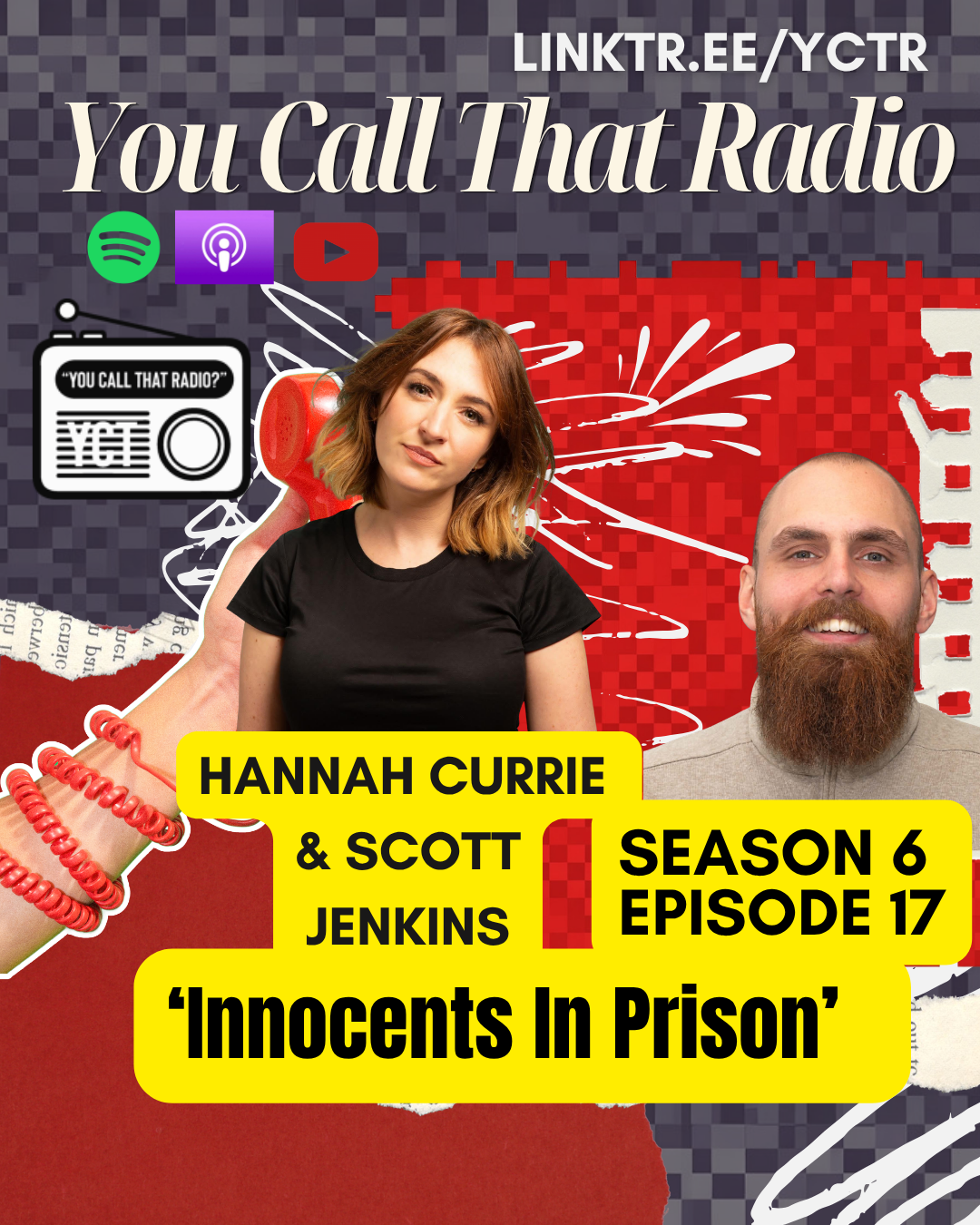
And we are live with BAFTA winning filmmaker Hannah Curry. Hello, Hannah.
[00:00:13] Speaker B: Hello, Mark, how are you?
[00:00:15] Speaker A: I'm good, I'm good. And a CEO of Mojo Scotland, Scott Jenkins.
And we are having a chat about hopefully a forthcoming piece of media. I don't know if it's going to be a film or a TV show, it could be anything. But at the moment it's called Got the working title, Innocent Trial and Error.
So we're going to go in and talk about miscarriages of justice and some stuff like that. But before that, Hannah, do you want to just give us a wee introduction to yourself and sort of your background?
[00:00:48] Speaker B: Yeah. I'm Hannah, I'm a documentary filmmaker from Glasgow.
I've been making documentaries for maybe five or six years, mostly for television, but I've done a short which was funded and won a lot of awards or was nominated for a few as well.
And I'm really keen to get back to like cinematic documentary and independent film.
I guess I'm less enamored with the way that broadcast is going to, going at the moment and I want with my first feature film to have the freedom to really tell the story that needs to be told. And then the idea would be that after it has its kind of cinema and festival run, hopefully it would be cut down for broadcast.
So that's the idea with this film.
And yeah, I'm ready to make this film. Like I'm a new mum now, my time is very precious so I'm really prioritizing getting this off the ground and getting it made. And it is going to be a difficult and long process because of the nature of the, the topic and the sensitivity of it and also the creative process of, you know, making something what like watchable and captivating and shocking, but also lovely and hopefully funny at times as well as a long process. But I believe this is a story that needs to be told and I've known that for a few years, since I first met Scott at the Miscarriage of Justice Organization and some of their clients.
So I feel that, you know, in the absence of anybody else telling this story, I would like to tell it and I have my own reasons why I would like to tell it. But yeah, first and foremost it's a really, it could happen to anyone. It's a really human story and there's, there's really lovely people at the centre of it who should be living the lives that they were supposed to live, but instead have been living under the shadow of this conviction that wasn't even supposed to be theirs.
[00:02:59] Speaker A: It's absolutely terrifying the thought of being accused of something you didn't do. Obviously Scott, you're going to hear about this stuff all the time with Moja Scotland who I'm very familiar with from a lot of great work you've done and Alabama three after parties as well always stand out as as big nights.
So how did you get involved Scott and what kind of attracted you to Mojo?
[00:03:25] Speaker C: So I went right from high school to do my undergrad LLB in Scott's Law.
The plan at that stage at 17 was to work hard and go into practice. It was always criminal law that interested me and the plan was to go and qualify as a solicitor and try and make loads of money and hopefully get to the bar and the journey trying to get there. I joined Strathclyde Dinosis Project at the University of Strathclyde Law Clinic and kind of first few months my studies and really sort of caught a pit between my teeth and done nothing else ever since.
Worked my way up through that student run Innocence Project being the project coordinator which led me to our partner organization, the Miscarriage of Justice Organization.
Joined as a legal casework volunteer at 18 years old and then never left at the point of graduating having been kind of disillusioned with the legal profession and at that point having only really worked in services where the principal goal was to help people and provide access to justice. Realizing that that isn't the goal when you get into practice and issues like keeping the lights on and being driven by money and status or whatever was was no longer of interest to me. So thankfully and gratefully I was offered the Aftercare project coordinator role as soon as I graduated.
Role within the organization where the rewards are far less subtle and trying to achieve access to justice for our user groups where getting any kind of results few and far between I've been able to help people deal with consequences of wrongful conviction. They re enter an environment upon release the prison that they did no training for and they're not equipped to deal with by way of the damage done to them by their wrongful conviction.
Worked really hard for that for five years and was offered the charity chief executive role in December 2024.
[00:05:41] Speaker A: So yeah so congratulations. Is that. Was that. Was that the role Kathy did before or.
[00:05:47] Speaker C: Yeah, Kathy was co project manager for a number of years and then when that role was no longer divided into she was. She was charity chief executive from. From about 2019 to 2024. So yeah huge shoes to Phil and and Kathy as We touched on before we started. Yeah.
Irreplaceable person to. To have about the organization. Uh, so, yeah, Kathy's brilliant.
[00:06:15] Speaker A: I did see. I did see her briefly.
[00:06:16] Speaker B: The.
[00:06:17] Speaker A: The bun supper night. The friction bun supper night. And she. She was looking good for retirement. So shout out to Kathy. Well, well earned. She. She worked really hard.
So. Yeah, so how. So you sort of touched on it briefly. Hannah, how did you. So how did you get the mojo? I know that you're saying it was something that you wanted to keep to yourself. Why. Why it's important to you, but is there a how. How do you first come across mojo? And how do you.
You feel like you want to document this?
[00:06:46] Speaker B: Somebody reached out to me. Like, it might have even been like three years ago, maybe two and a half. My concept of time is just so warped.
They reached out to me and they said that they had a friend who did 15 years for a murder that they didn't do and would I speak to him. And I sort of started reading up on that and I kind of read, you know, what the newspaper said about that person, the tabloid, newspaper papers, and they were very, very harsh. Like, you know, like, you. Like if I just read that about that person, I would be like, no way that I want to do a film about them. But then I sort of read some kind of like, legal review type papers on. On what had happened. And then I learned that I won't say who, but that another journalist was. Was. Had been looking into this case, but had had to drop it at the last minute. And so I knew there was a complexity there. So I was like, sure, I'll meet. I'll meet the guy. And I found. I'm. Found him to be like a really interesting guy, like, but. But not typical of. Of a victim of miscarriage of justice. And that like, I would say he's done amazingly since he got out of prison and rebuilding his life and helping other people and building a family life, you know, and in sort of like moving.
Yeah, just. Yeah, just the way that he parented his kids, even with like, with such sort of gentleness, was like, you know, it was testament to me of the type of person that he. He was. And it wasn't what the tabloids were representing. So I think that definitely intrigues me at the time because.
Yeah, I guess I started thinking about, like, well, one thing they said to me was like, you know, the thing about injustice is it's like this is like the. It's the best way to hurt somebody because, like, it's there's nothing that they can kind of like, they're just like, scrabbling around, they can't do anything about it.
And especially at that level, when it's something like murder or serious sexual assault and it's making headlines in the newspaper and everyone thinks this about you, and then a court of law, you know, says that you are. That the majority of society are going to believe that about you. And. And I just was like, really kind of disturbed about that.
And also this idea that while you were serving that prison sentence, somebody else who actually was guilty of the crime was. Was living, I suppose, again, that life that you should be living because everything is like, taken away from you and it's not just taken away for you for the time that you're in prison. And this is something Kenneth Scott's explained to me. It's like, if you are guilty of a crime and you do your prison sentence and you finish it, you can move on with your life because you, you, you broke the law, you did a sentence and now you can, you know, move. But if you didn't do it and that's. That mistake hasn't been corrected and you're living with the consequences of that conviction in terms of not being able to gain employment, you know, like. Yeah. Not having any idea how to sort of, like, work in society, having PTSD from prison, which means you don't want to leave, like, your bedroom all day.
That just was, like, really was, to me, like, very troubling. That, like, that can happen.
[00:10:02] Speaker A: Yeah. I hadn't even. I was just. I hadn't even been thinking about the fact that there is a guilty person still walking around.
And Scott, when you, obviously, you've been dealing with people who have been wrongly convicted and then it's been overturned, I don't know if I'm using the right. Sorry, any legal jargon. Feel free to connect me at any point.
How rare is it for somebody to get overturned even if after they've done the sentence in that case, do they find the person? There's a. Technology DNA is. Anything changes. So the person who got away with it for get. Get brought to justice.
[00:10:46] Speaker C: Yeah, that's one of the kind of principal issues that Hannah and I together are trying to highlight when we're looking to showcase the plight of the clients and the, and the working mojo is. That's the kind of principal issue affecting the. The clients that have been convicted most recently.
We were founded in 2001 by Paddy Hill of the Birmingham Six, who had made a pledge to campaign for. For Those who left banks and, and
[00:11:13] Speaker A: for, for people that don't know a Paddy Hill legend because you just got explained briefly the Birmingham Six story for people that might not be aware.
[00:11:20] Speaker C: So yeah, the Birmingham Six were six innocent Irish men wrongly convicted of the, the 1976 Birmingham pub bombers.
They were basically lifted off the street and tortured to confess for a mass murder and an act of terrorism that they had absolutely nothing to do with.
Principally because the state were unable to pin the conviction on those that they know who had done it to save face and for nothing else had picked these people to, to they will be convicted and that's it.
The eventually 16 years after the fact and after many attempts at an appeal, I think, I think the six of three attempts at an appeal altogether, eventually the convictions were coerced because in relation to other egregious troubles related miscarriages of justice. Evidence that was never really disclosed to the defense has been uncovered by Paddy's lawyer Gareth Pierce. And that lifted the lid on the kind of far reaching state corruption that had ruined these men's life just, just to, just to save face.
And the public appetite at that time quite properly was how on earth can this happen in the United Kingdom?
Why did that happen? And why, why did it take so long to identify, correct and bring light that a mistake had happened? So in response to that and in response to the, the, the public disgust and appetite for change, the appeal system was reviewed firstly in England and the Criminal Cases Review Commission began their work in the late 1990s and in Scotland some years later in the early 2000s after a bit of kind of reluctance to, to acknowledge that the same sort of mistakes do happen up here and that there is a need for a watchdog public body out west, the courts of the State identifying and correcting these kind of things. But eventually in Scotland done the same. And at that point a lot of people were achieving access to justice and a number of high profile people profit particularly In England then 253 and others there was maybe 10 or so huge high profile cases.
What that began to do was regularly show up the trial system and the appeal system and the State for making mistakes. And at some point it seems like the ladder was pulled up behind these clients in the CCRC in England and SECR3 in Scotland's performance levels and referring cases, re referring cases that they have said are a potential miscarriage of justice and never got access to justice through the court and the first attempt are being sent back which should be happening and then the referral rather the success Rate on appeal for these second or subsequent appeals are far less common than first and ordinary appeals. That's to say, cases that the court has referred to itself. I've got a greater prospect of success than the watchdog that's there to provide a vehicle back to the court and back to getting justice for my clients. So, yeah, like I say, the norm now for MOJO clients, regrettably, is that they reenter society as aftercare clients upon the completion of their sentence or having been paroled rather than walking out the appeal court exonerated.
[00:15:06] Speaker A: So the exoneration, what is. I mean, what would you say, percentage wise?
Because it just seems to me, maybe I'm just being naive here, but if you are, if you've been. If you finished, if you actually finish a sentence and you're out and you're still appealing it, it would, it would seem to me that the. I mean, what would you say, percentage wise of that person being innocent as.
[00:15:33] Speaker D: I think
[00:15:36] Speaker C: I take your point and I think a lot of people probably would agree with you, Mark, that somebody who has completed their sentence and is trying to clear their name upon release and is unwilling to let that injustice go probably is a fair indicator of their clay B. Innocence. I think, I don't think that's universal. And it's not been educated.
[00:15:57] Speaker A: Obviously not, of course.
[00:16:00] Speaker C: Yeah, yeah. I think like none of our clients, even though we are honest with them about the really low prospects to success, we're talking like a 2.2% success rate and second or subsequent appeals and sentences of like five years or more, cases that carry the most significant sentences. So a 98% failure rate, in other words.
And our clients that have been unable to achieve access to justice simply won't give up. And that is because they have to live with the, the, the stigma and the, the just the state that's wrongdoing is so kind of slow to. Well, first unwilling to acknowledge that makes mistakes. And then when mistakes are presented to them, they're. They're slow to identify and very slow to correct.
[00:16:53] Speaker A: Because I was, I was one I found quite interesting was Shirley McKee. Shirley McKee, which for people who don't know, that is.
That was a form a policewoman.
And it was something to do. You could maybe explain it better, but it was something to do with fingerprints evidence because back then fingerprints evidence was 100 was considered 100%.
And that changed things a bit. And I think also it changed things in the public eye because that here is a policewoman.
And you know, are you familiar with that? Case, I'm assuming.
[00:17:33] Speaker C: Sure, yeah. There was kind of two interrelated fingerprint evidence issues surrounding that.
My understanding Charlotte McKee's play is that she was a police woman who said she hadn't entered the crime scene and the fingerprint expert had said that her fingerprints had been present and she'd lost her job and eventually perjury I think was. Yeah, it's proven that basically the science behind the fingerprint analysis was sort of mumble jumbo pseudo science that would say there's a probability of this is astronomical, that this definitely is their fingerprint. But the case I think in question, a guy called David Asprey, he had been wrongfully convicted of a murder and sentenced to life in prison and same thing because of flawed and failed fingerprint evidence.
I think put simply, he was like a tradesman kind of guy that had been working in the. The woman who was sadly murdered house and had kept like his, his cash and his own sort of biscuit t. And they'd said that the woman's who had been killed's fingerprints. There was absolutely no question that our fingerprints were on this biscuit tin and there they'd found a motive for the murder was that he had, he had robbed her and killed her. So David's also um, a huge victim and that can sometimes overshadowed by the, the, the, the internal scandal with the police. But David's eventually had his, his, his conviction course for, for that as well.
[00:19:17] Speaker A: How, how long ago, how long was that in David's case?
I think it was.
Where are we now? Sorry, if I'm just.
What are we with the fingerprints?
How is it, is it. How's things changed? Have they changed anything and about how
[00:19:32] Speaker C: they go about it. So there was a national inquiry into how that evidence was used and why that went so wrong and a huge sort of dossier report published into that.
But there is still other ways in which expert evidence is used to manipulate, confuse, bamboozle juries.
DNA evidence being quite a common one with somebody in a white coat who's a professor says there's a 1, a billion to 1 chance that that DNA is not that person's.
Again, sometimes that is just an opinion and that which seems unquestionable and something that a jury would probably look to convict somebody beyond doubt with when they hear that as often and more challengable than you think.
We see all sorts of other ways in which experts overstep the mark and the evidence that they give on behalf of the prosecution.
A recent one that we've encountered once or Twice is gait analysis. So an expert in watching people walk can say that the Balaclava man way through that, as there's no doubt whatsoever that Scott Jenkins. Because the science says that they walk in the same way, I think that that's quite questionable.
There's an absolutely high profile case in Scotland where basically two guys had given experts, so they weren't qualified to give any evidence at all. And I don't think it was. There's no Kennedy against cordial. That's the other case that outlines the parameter for what an expert can say. But these two experts had professed to be experts in bone density and injuries and they weren't experts at all. And it was just kind of made up science. That conviction found itself being coerced as well, quite properly.
[00:21:40] Speaker A: But how on earth does that happen? How can someone turn up and say they're an expert and they're not? This is like that time that Taxi Driver ended up in BBC talking about, you know, it's like, is this like, is this like premeditated, let's get an expert and oh, we can't find an expert to see the right thing. So we'll just get a guy, we'll get one of my pals on to say he's an expert in bone density. And as for the. The walking thing, that's terrifying because, I mean, somebody could just learn how you walk.
Like even Corey Feldman does a half decent job at Michael Jackson dance move.
Half, half decent. 10%, maybe 5%. But if you had a balaclava and you've seen him and walking down your street, you wouldn't be. And you got your pal to be expert.
Sorry, that was.
[00:22:29] Speaker B: Prequelists.
[00:22:34] Speaker C: Happen as, as, as. Right. It's basically the exercise for the Crown and the prosecution, isn't it? To get the right result is to secure a conviction at all costs.
You touched on it absolutely properly there, Mark. Getting an expert to say the right thing.
These people know what their gig is and that gig is to secure a conviction and they know that they're being paid by the state to do that. So the case that Hannah touched on, that, that brought us into contact, the expert in that case was willing to talk to the appeal team at a subsequent appeal to say that she'd been wrong about which weapon that was used in a fight was the murder weapon.
And that was kind of rumbled by the Crown, who basically put us up to that and says, don't, don't speak to that. This particular person's legal team got a bit of kicking in the Appeal court for trying to raise that as a problem that the Crown are trying to hamper the appeal by interfering with an expert that's willing to say like not only could I be wrong in the evidence that I gave at this person's trial, I believe now that I am wrong.
And like I say the. The appeal got a bit of kick in for writing such a truculent and unfair and unpleasant letter about the Crown agent.
So that's again the turn are there to secure a conviction at all costs and we say that the appeal court are there to preserve convictions.
[00:24:13] Speaker A: And is there any legal repercussions for a so called expert or indeed an expert who just got it wrong if they were to say an appeal court I got the. I mean the murder weapon wrong that I mean do they. Are they. I suppose at the very least they've got the reputation to deal with but is there any other.
Any other consequences to. To the for that?
[00:24:39] Speaker C: Well if the fuel court were willing to shine a light on that and say that this can happen but again they are more interested in preserving public confidence in the system as a whole.
Like I say the attitude to that as shown in that particular case and the expert is willing to say they're wrong and they are not even willing to engage with that.
A recent example a kind of new applicant and a newer work today one of the High Court judges who was the trial judge and this conviction and this is almost unheard of and the work we do but as a matter of course for the first appeal the trial judge enters a report to the appeal court about the legal issues around the trial.
Typically that's a report and how everyone was done properly and they're defending the the way the trial was was conducted in law.
This judge had said basically serious concerns about the validity of this conviction and had a no case to answer submission been submitted by the defense. I would have allowed that this judge caught a bit of a kick in by the appeal court as well for saying that she's letting her own judgment of the facts cloud our assessment of the law.
Why she's straying into the job of the jury and entering her opinion about the facts. That's not her role and basically she doesn't know what she's talking about and the conviction. As to the guys contacted us for a second attempt an appeal.
[00:26:18] Speaker A: I've got the. The actual got a thing for innocent trial and error. For people that are wanting to hear more about it I'm going to. We'll play from the start or we'll Skip it the first minute. Because we covered some of it already.
[00:26:31] Speaker B: Yeah, yeah, skip the first minute.
[00:26:32] Speaker A: Skip the first minute. I thought that she's about right, so.
[00:26:35] Speaker C: Yeah.
[00:26:36] Speaker A: Okay. What is this? This is innocent trial and error, exoneration.
[00:26:41] Speaker B: Thank you for your Support.
[00:26:45] Speaker D: I'm Patrick McGuire, won the Maguire 7 miscarriage of justice back in the 70s.
There's a lot of damaging parts to it. I don't dwell on it too much, but I can't hide from the fact that I was a child when this happened.
It goes without saying that it did have a big impact on me.
I think that would have an impact on any child going through something. But my life turned black and white, you know, colorless, overnight after we got arrested. And I never picked up any. Anything to do with art until.
[00:27:20] Speaker C: Until I went to prison.
[00:27:21] Speaker D: Then eventually I. I started to do cartoons in prison, letters to my parents and other people, and among it all, you know, getting our names cleared, which we did eventually. But in that journey, I got back to art.
I'm very much in support of helping campaigns of any description that where injustices have been done, I'm sharing my art and lending it to this cause simply because there are a number of people in prisons for crimes they haven't done, and it's just not right. And I do hope one day when this film is done, people will see it and they'll be shocked and stunned and they will cry, they'll have doubt and they will laugh somewhere in there as well, you know, because it's a true life, very true life story. And for my own self, my own children, my grandchildren, for them, things like this need to be done. So when I'm not around one day to let them know that wrong was done, but we put it right.
[00:28:31] Speaker A: And you can see the rest of that on up the link in the comments here. So there's a crowdfunder to get the. To get off the ground.
So to bring you back in with regards to the actual film inside of it, obviously, I'm assuming that it's a tough time to get things funded. And what kind of obstacles are you coming up against trying to get this film made?
[00:28:59] Speaker B: Yeah, I should say just, just in that clip isn't from the film or anything. That's just a little clip that I filmed when I was down in London with Patrick McGuire, one of the Maguire Seven, who's supporting our crowdfunder by lending his art to the campaign.
The campaign, the crowdfunding campaign we launched to.
To get. Yeah, to basically get into like, proper funded development with the film, which means kind of creating a proof of concept that we can take to market to get, hopefully get bigger funds for people who don't know.
[00:29:33] Speaker A: A proof of concept. What. What kind of. What does that. What would that look like? What would you.
In an ideal scenario, what is the proof of concept that you're taking to a potential broadcasters or us?
[00:29:45] Speaker B: Yeah, yeah, well, initially, yeah, documentary film markets, because we want to make this film independently in the first instance and then. And then hopefully bring a broadcaster or a streamer on board.
But we, Yeah, a proof of concept is. Is something. So we have to essentially sell this film in order to like to again and again and again and again to every stage. So at development, in production and after it's released and at distribution, we have to push this film out and sell it and convince funders that there's an audience for it.
And also, I suppose, show funders. What my creative idea is in my head, to tell this story and to potentially show them some of the characters that we might be working with.
Characters, obviously meaning real people, contributors, but in film terms. And that's got to take them into that world because at that stage we're now looking for funding to go into production. So here's what you will be paying for us to do, essentially, because films like this are incredibly hard to fund. And as I said earlier, if I was to take this to a broadcaster right now, I would be kind of having to, you know, that would be a collaboration really between me and that broadcaster to, to tell this story in a way which is acceptable for a public broadcasting channel to do on all the legalities that surround that and the compliance issues.
So I need to be able to have the freedom to make this film.
That's really hard to do like it is for any artist right now. Like, it's, you know, funding is.
It's just been caught everywhere.
So. So it's highly competitive and you know, you go to these things and you may, you may get like a little bit of funding from Screen Scotland to go to the market to pitch it, where you compete against like, you know, nine other projects from all over the uk which all have a right to be there.
And maybe you don't win it.
[00:32:08] Speaker A: Well, they all have a right to be there.
[00:32:11] Speaker B: Well, I mean, they've won that right to be there pitching it. But.
[00:32:16] Speaker A: But yeah, okay, I, I would just say that surely the law of averages means some of them will be shape.
[00:32:24] Speaker B: You know what really, I mean, my, my experience of pitching in a public forum is. Is little because I Did it for the first time last year at Celtic Media Festival in Cornwall.
And the pictures were really good. You know, like, they were really good, like, because, yeah, law of average is not. Not really. Mark. Lots of people, you know, want to make films. Not all. Not all documentaries necessarily, but lots of people want to make films and lots of things need films made about them. And they. The question that you're kind of always having to answer is like, why. Why should you care?
And why would I want to go and watch it?
So we have to sort of prove that. That. That stuff. Unless we get, you know, like a really rich private investor who just wants to pay for the film. But I actually think that process of, you know, applying for public funding and having conversations at markets with people that. That do. Do work across the film industry is a really good thing for the film because it makes you, like, rigorously.
What's the word? What's the word I'm looking for? Like, not question it. But, you know, like, you. You.
[00:33:36] Speaker A: You've been forced to kind of picture brevity. The brevity. Because obviously I would imagine right now you've just got so many ideas and you put so much time and effort into it, but when you've got to pitch it, you've got to just.
[00:33:51] Speaker B: Yeah, yeah, it's like 10 minutes. Ten minutes, you know, and. And even for the pitch, to win money, to make the proof of concept, I've got to like, make some sort of visual teaser from. Not very much at all. To try. And how.
[00:34:05] Speaker A: When you said about the characters. Because I'm sure the. Obviously that's the business terminology, but obviously I'm sure there'll be characters involved. They've been. They've been in jail. Wrong. In prison. And you just even heard Paddy, there is.
Sorry, was P. Maguire. That. That was. Yeah.
Patrick Maguire. So, you know, he said that there is. There is going to. There will be some laughs on the way as well because of that gall humor that you would need to. Have to sustain yourself to after being in prison for something that you didn't do.
But, yeah, you've got. It's a. It's a compelling story that you're trying to create for people to do. So how do you pick. How do you pick the characters, Scott? Do you have. Do you have a bit of insight into. You think people that would naturally be good on film or people that are particularly want to be on film? How's that process?
[00:34:57] Speaker C: Yeah, listen, some guys in the position that we are trying to highlight, that is to say, still trying to get their names cleared in a conviction course after they've come out prison are fiercely protective with their. The privacy and the thought of this is an absolute. No, no. But when Hannah first come into contact with us shortly before she had a big baby and we were doing quite a lot of development filming over the course of sort of two years and that was basically how we got to this point in terms of who are the likely contributors and which stories are going to be the ones most appropriate to tell.
Having spent a long, long time basically like a fly on the wall or a bubbly nice person in the office with a camera around the clock getting introduced to these guys.
And I seen for herself firsthand the process of us reapplying for a number of people in resin and on the outside and then sadly no getting the result. They were listed for one. One guy in particular who's been sort of the central contributor to the development film. And so far, as someone who's been maintaining his innocence on the outside for 44 years and has said his case refused by the Scottish terminal cases commissioned twice in the past 25 years, both times we say for absolutely spurious reasons and he's no willing to give up. His reason for being so anxious to contribute and get his story out there is that if the state and the commission are not going to give him access to justice, he wants people to know what happened to him. He wants people to know what was done to him and why and then how difficult it was for him to get his name cleared and what he's done for his last. The last 44 years of his life to. To get to here.
That's.
That's says main drive to be. To be part of the film and to be part project.
[00:37:14] Speaker A: I saw, I saw there was a one. One quite recently I seen a couple of police officers had been killed for setting somebody up or something like that. So when you get the.
I suppose what I was. I was going to ask is what. What is the process for? Because obviously there will be people who will be like, oh, I'm innocent. And they'll try to. To get module involved. How. How. What is the process to make sure that you. You. You've got. You're. What. You're. You're helping innocent people and there's not anybody sort of falling through the net.
Sure.
[00:37:46] Speaker C: So the general rule of that is that it's incumbent on an applicant to satisfy us as an organization that they've got an objectively, the Morse will claim to be an innocent, so they have to Find us typically through word of mouth in prison, they fill out a quite extensive application process where they have to make a stateable claim innocence in the first instance. So in simple terms, I claim innocence that's capable of being true. If that's capable of being true. That triggers what we call our stage one investigation in which we get all the material relating to the preparation and presentation of their defence and any subsequent appeal and where we can the Crown disclosure and evidence relating to the stuff that shows that they might be guilty.
We are student volunteers, typically law students, criminology students, forensic students will then interrogate all that evidence, go and have an informed discussion, at least one informed discussion in prison with the applicant who has to stand up to us or claim innocence and then that's presented to a committee of trustees, staff and their peers, their volunteers and we, we have to be satisfied in that person's claim. It's quite a rigorous and and long process.
Like I say, the state are reluctant to validate our clients. And so that in the first instance is kind of somewhere along the line independent third party's taking a look at this and said look, we are satisfied that you've been wronged here and that's the first kind of validation. But yeah, it's all a question of credibility for that. It's an ongoing requirement for them. It satisfies their innocence. Wouldn't it do any favors for us to. To, to not be satisfied in their credibility?
[00:39:47] Speaker A: 100%. And did you said that there is the main. I think it was before we went live that there's a.
There's a backlog basically. Is this, is this, is this a hangover from lockdown or is this. Or is this more kind of just the lack of the system wanting to take responsibility for the failures?
[00:40:06] Speaker C: So yeah, we've invested a lot of resources in getting more efficient at our stage one assessments. That's just because the number of inquiries we get for help every year is going up and up and up. We previously used to average 250 applications so new applications a year, which was unprecedented at the time. The last two years we've been averaging 350.
So we have to make sure that all these people in a and a reasonable or as a reasonable as possible amount of time we are coming a robust decision on that application. But the logjam in the organization is not at the later stage aftercare when we come out where we're experienced and well resourced to try and help these people put their life together, it's that that middle part of Trying to get their name clear. So if we I think in the 42 years that Hannah was working with us, certainly in the the first year we six applications into the commission and none of these resulted in a referral back to the appeal court.
So those six people are still requiring access to justice. Well we're identifying roughly around 10% data will applicants those 350 every year the number needing legal help. Where can a finite resources one qualified solicitor and myself and my casework manager duo graduates.
And like I say those six are still back in the mixer trying to. Trying to progress their case with more coming at the back. Yeah. So that's the principal issue that we've got and trying to help anyone. And of course it causes issues for asset care as well because we're trying to treat someone for post traumatic stress disorder having come into prison when the state's regularly re traumatizing them by refusing them access to justice where we have been fortunate enough to support someone who has said their name cleared. Very, very few of those people receive any compensation. Next to nobody receives an apology for the state and we get outwefts. Their organizations get no help whatsoever putting their life back together.
[00:42:18] Speaker A: So even. Even in the. In the rare case that justice has served for an innocent, it's overturned. There is no compensation and not even an apology.
[00:42:27] Speaker C: No. It's how they can continue to kind of re stigmatize that client. You touched on police officers quite properly getting sent to prison for fitting people up. We've got countless stories of that.
We're founded by someone who was tortured to confess their crime and never committed. As was Patrick or trustee that appeared in the short piece to advertise a crowdfunder. All these people got promotions for securing the convictions and nobody lost their job for.
[00:43:04] Speaker A: No. No. And they never even received any consequences after the justice.
[00:43:08] Speaker C: No.
The. There's. Yeah.
And those who did bomb were never brought to justice as well. It's a way for the state to leave a question mark over these individuals.
[00:43:23] Speaker B: Sorry. It's just sometimes when Scott speaks I'm like oh yeah, I need to write that down actually nuggets of like information. And I know it already but I think it's. Yeah. When you're kind of are writing pitches and you're trying to explain. Explain to other people like why this really needs their attention.
It's. It's kind of important to constantly be thinking about that because like they don't have the opportunity necessarily to sit in the room with that person like I do or Scott does and look into their eyes and just like to me there's like no option but to help them.
So it's my responsibility to help other people see that without really having much to show yet because we're at such an early stage. But that's what the crowdfunder is for, to introduce these people to the world eventually. But first and foremost to the people who have the money to get the film need.
[00:44:22] Speaker A: We've got the crowdfunder for innocent and the comments and the description as well.
Hara, what would you.
Obviously still quite early on in the development and it's going to be a wee while away, but what would you like the final result to be? How would you imagine the film playing out in an ideal world?
[00:44:46] Speaker B: Well, I mean, we have like an incredible example of an independently funded and developed documentary, Everybody to Kenmure street, which also had a crowdfunder on the go in earlier days. Just like, you know, it's like sweeping across the globe and everybody loves it and I am easily still haven't seen it. I always just blame the baby. But I'm going to see it tomorrow night and I can't wait. But it's like, you know, that's, that's a film that has landed at the right time when a lot of people are feeling really, really desperate about the situation and need to feel some hope and so, so there's lots of reasons, you know, I'm sure it's absolutely incredible as well. There's lots of reasons why, why something would do so well. But obviously the impact campaign around that as well and kind of like getting people talking about these issues and actually, you know, getting people active in their communities to stop this from happening is so cool. So like, you know, this is a different topic but, but I would hope to. To resonate with audiences in a way that meant the film could create a big enough impact to.
To really, really, you know, anger people into. Into wanting the system to be reformed and wanting some of these people to achieve exoneration before they die. Because that's going to be the reality for them and they just don't deserve that after a whole lifetime of this, you know, it's just, it's. It's ridiculous to me and it's that whole thing that I have in me of like being really mad at power, you know, like what power, like how. How people can climb and then just not care at all about the collateral damage that's done to ordinary people.
I think that's like, you know, what all of the world's problems are founded on and if I can take that on and take those people on, like I want to say no, like you get to get away with that. You know, like I want people to be angry.
And it has been done. You know the post office scandal and then.
But more, more the drama that change that. That resulted in a law change and you know, everybody and that everyone who had it within their power to change the law knew what had happened there. But it took the public being angry about it because of a film to make them do something about it. So yeah, obviously your hope is I wouldn't be making it if I didn't have big ambitions for it. I have to be driven by that because it's going to be a long journey and as a labor of love for me. But like yeah, you know, independent documentary, independent cinema is as not a great place but like you know, as everybody's Kenmore streets just showing it. It's not impossible. So.
[00:47:37] Speaker A: And also there's a.
It's funny.
It's not funny.
There is, there has been the rise of like true crime where everybody is like an armchair detective now as well.
But it always, it's always, it always seems kind of mostly from what I've seen as looks more of American topics of discussion. But do you think that maybe that. Could that be a. Could that be a double edged sword? Could that be a good thing or a bad thing?
[00:48:04] Speaker B: Well, I, you know, like look, I like.
I'm fascinated by true crime as much as the next person is like in that kind of voyeuristic way where. But I'm also as a filmmaker I'm fascinated and what the antithesis of that is. I suppose it's like. It's more about because these, these people haven't. There actually is no crime in this documentary with the characters I'm working with, you know, so like I'm more interested in and the people that are behind this and in the same. Yeah, I'll not say too much but I have another film like in development which speaks to that as well. But yeah, I think it's not about like yes, you have to make a film that people are drawn to. You have to present stories that people want to stay with. And I don't have any doubt that we can do that with what's happening to these people.
So it's. Yeah, it's more just about how for me it's less about entertainment and more about like. Like taking people on, on a journey. Like letting them as I hope to do with all my films like hope that they see Something of themselves. So their families and these people are in the life that they should have lived. As I said, like, you know, what would their life have looked like if they didn't go. Go to prison? Like, you know, would they have got married? Like, would they have, like, you know, like, done this job or that job to support their babies, like, with the. Like. But, but, but, but many of these people, not all of them, but many of them end up really alone. And like, all they actually have is mojo for that sort of, you know, like, constant. Because, like, yeah, 44 years do. I mean, like, certain members of your family might get sick of talking about it after, you know, but it's like you can't move on from it because
[00:50:02] Speaker A: if you just look at how much the world's changed even in the last five years. You know, five years ago, I think you had a dating show on here on Streamyard.
It was a conversation. But that just shows you how much the world's changed. For somebody who's maybe even been wrong in prisons, even just before lockdown, say 2019, it's like, what is going on?
You just came out to a completely different world.
One task.
So it's probably the same question of the. With Hannah, what I want. Of what. What she thinks our film could be. When she.
[00:50:36] Speaker B: What.
[00:50:37] Speaker A: What do you think? Is there anything specific that you could mention that something that could change within the current justice system that could. That could improve? Would there be. Is there some. Is there some sort of.
Sort of a. Sort of a happy ending that could. Could become of the end of the
[00:50:56] Speaker C: documentary sort of thing?
Yeah, that's. We need a completely systematic change in view and what the function of the appeal system is for as to support the Paddy hills and Patrick McGuires of this world and achieving access to justice, highlighting, identifying and correcting wrongful convictions within a reasonable time frame. We just simply don't. Don't have that at the minute you mentioned there, Mark.
The kind of appetite for American programs and issues surrounding that, that's something that we've actually encountered for a long time.
Ten years ago, I think it was. We had the lawyer of one of the guys for Making a Murderer, which was obviously huge at the time, and the producer of that and the office interviewing Paddy.
And we were congratulating them both on the huge success of that program at the time. It was monstrous. It was massive.
And they said, actually that's far more successful here in the UK than it ever was back home. Because the appetite there is more for stories about people like Paddy and cases that had happened overseas. People are.
It's not a very comforting idea that the state can pluck you off the street and prison for a long time for somebody who didn't do so. That's something that we are hoping to get across to the public and our campaign trying to affect real structural change in order to provide access to justice for our clients. But people need to be made aware that this can happen to you.
It does admittedly only happen to a percentage of people who the criminal justice who comes into contact with perhaps far too often and the. The consequences are huge. But I think a lot of people don't realize how it can happen and why it can happen.
You touched on the post office scandal. Look at what the state can do to thousands of hard working people.
They can knowingly fit them up on dodgy evidence and try and bury that on a huge, huge scale. These are thousands of people that went to the work every day as postmasters
[00:53:22] Speaker A: and working in the post office as well. It's just.
[00:53:27] Speaker C: And they could try and brush thousands of them under the carpet. So think about what they could do if it happened to you and you're just one individual standing on your own.
[00:53:37] Speaker A: Absolutely. And we've got some comments in and we're team for a couple of quick comments.
Really enjoying the conversation whilst recognizing how devastating the topic is. Appreciate everyone. Ms. Shannon's got the very best for the film and amazing what they do.
[00:53:51] Speaker B: Thank you.
[00:53:52] Speaker A: Epimu says heavy carrying a conviction for someone else's crime known the investigation and court performances were a farce and my heat's hurt. I was just thinking of a number of industries they'll need the legal assistance in the battle against legal systems in Scotland and in England. Shouts to Jers tuned in as well. I've put a bit of link here and it's don't see it as a credit funder see it's more of just getting a bit more information on what is going on and it looks like you're off to a good start with it as well. Which is great to see but yeah I've got. I look forward to it. I really hope it goes well. Is there anything else that you would like to show? Is there anything else happening your end Hannah or. Well you've got an Instagram for innocent. I'll put that in there.
[00:54:36] Speaker B: Yes, yes innocent film on Instagram and we're posting lots of content there. Just about about the film but also about miscarriage of justice historically and present day what's happening out there. So you can kind of stay informed on the topic. That's right. And yeah, no, I know. We just really appreciate the opportunity to kind of speak to folks that are invested in the cause and, you know, like, as you said. Yeah, like, totally appreciate. Not everybody can donate to a crowdfunder right now, but if you can share the crowdfunder or the website or the Insta and just sort of say, you know, good cause or whatever, or like that you support it, that all really, really helps us too. It's just about getting the word out there and, and yeah, we're like, the ball is rolling now. We've got a few things we're going to be announcing in the coming month which are really exciting for the film as well. So we feel like the fire is lit under it and we've just got to keep that, keep that going and I won't. I won't drop the ball.
[00:55:34] Speaker A: Amazing. Scott, anything else you'd like to add before we go?
[00:55:37] Speaker C: No, no, I just want to thank you as always, Mark, for your continued support and all the work that we do in module. Thanks very much for having us on and for. For supporting the film.
[00:55:45] Speaker A: My pleasure. Thank you very much. Scott Jenkins and Hannah Curry.
Go. And if you're on Instagram, it's Innocent Film at Innocent Film on Insta. And The Crowdfunder is Crowdfunder.co.uk forward/p forward/innoCent-1.
It's all in the bio. If you listen to the audio podcast, it'll be in the description and if you're watching on YouTube, it's in the comments.
And thank you very much to Martin Lindebank for making the Flyer because I was on the. I was on a. I was on a train with bad reception. So he's did the flyer and it. And it looks, it looks much better than when I would have made. So shouts to my bank and shout outs to Mojo and Hannah. Thank you. This has been quiet radio. Bye. You are tuned into.