Episode Transcript
[00:00:00] Speaker A: Foreign.
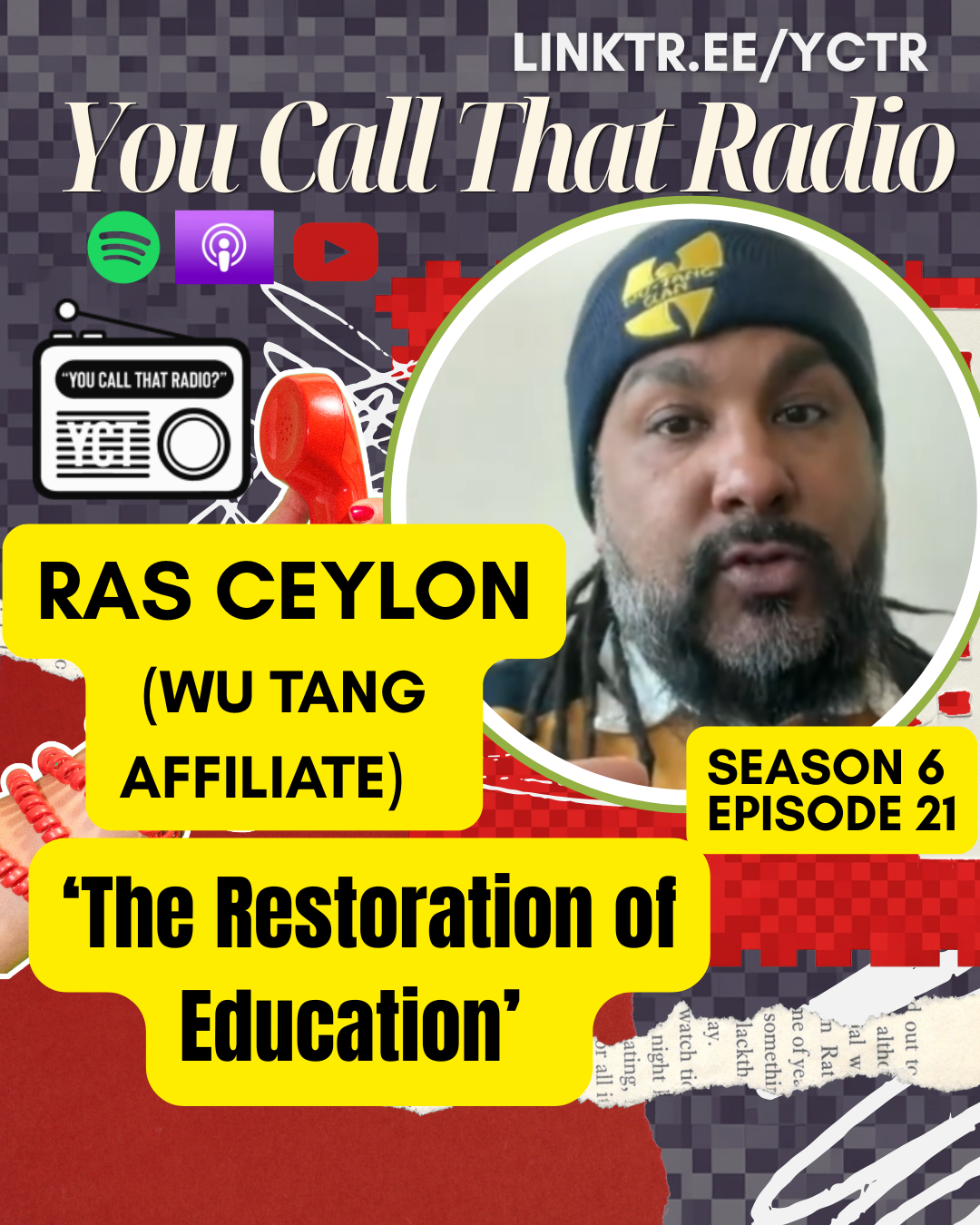
We are live with Wu Tang affiliate MC Educator RA Salon. How you doing, mate?
[00:00:22] Speaker B: Peace and blessings. What's good? What's good?
[00:00:25] Speaker A: All the way from East Oakland.
[00:00:27] Speaker B: Indeed, indeed, man. So it's beautiful to be able to touch down with folks across the pond, as they say.
Never been to Scotland. I would love to tap in sometime. I know there's a rich history and legacy there too, you know what I mean? So salute to all the Scottish L listeners and everybody tuning in worldwide.
[00:00:46] Speaker A: Absolutely, mate. Well, yeah, give us a shout if you're ever in the uk. We can definitely make a Scotland gig happening.
It's an honor to have you here. We're going to be talking about the. The Scrolls of Line Rock with.
With the Timbo and what a great album it is.
Wu Tang affiliate, honored to have you.
I think we should start with the album first of all. Where did that come about and yeah, what was the process in making that like?
[00:01:18] Speaker B: Yeah, awesome. So this new album, Scrolls of Lion Rock out right now, as you mentioned, co directed by Timbo King, which essentially means he's like the guest, guest star, co host kind of thing. He's on multiple tracks and was kind of part of the whole process. Right. And he and I actually released an album in 2024 called Jacket Full of Metals produced by Dawood justice. And it was one producer and then me and Timbo. And so this kind of builds off of that track or that album rather.
But this one is more kind of. It's my focus but again with his support. But we brought in a lot of the Wu family in there. Right. So of course we have Capadonna on there, obviously made member of the clan as well as DJ a lot. Mathematics, who actually created the W and is, you know, they're Wu Tang's DJ and one of their core producers. He's. He has a track on there, of course, my big brother, prodigal son from Sons of Man, who's like a mentor for me for, for the past five years and then kind of the crowning achievement. There's others on there as well. But the, the really the most important thing I'd like to highlight with the album is the fact that it's executive produced by Oliver Power Grant. And for those who don't know, Power is one of the co founders of Wuang as a whole. He is the founder of W where and also helped, you know, the CEO of W Wuang brand essentially. So a lot of the things that you saw outside of the music involving Wu, that was my brother's Power Visionary mind, you know, and I've been kind of working with him over the past five years and, you know, receiving guidance and mentorship in terms of, like, all the work I'm doing within the Wu family, he was definitely there for each step of the way. And so when he asked me to be the executive producer of the album, it was like such a blessing, you know, to have a legend, you know, an iconic figure in hip hop and really in. In modern culture. Right. In many ways, if you look at the impact that Power has had, it's huge. And then. So that was a huge high. And then unfortunately, February 24, 2026, you know, he returned to the essence and became an ancestor. You know what I mean? So for us releasing the album in June of this year, you know, five months after Power returned to the essence, you know, it's. It's been a challenge, man. It's been a bit of a void there in terms of, you know, not feeling his. His physical presence. But it's all in his honor and we feel his spirit, man. It's very strong.
[00:03:44] Speaker A: Absolutely. So a complete. Completely a dedication and. And what a dedication is. It's a great album. It flows so well.
There's so many topics that you pick on. There's a. It's. You've got some really good traditional bimbap tunes there. There's some bimbap bangers there.
[00:04:04] Speaker B: And.
[00:04:04] Speaker A: But you're also going into sort of, I don't know if it's the right phrases, conscious rap, but, but, but lyrics to make you think. Talking about the. The state of the world, you know, the misinformation from the media, the free Palestine and, And, you know, you're touching on subjects that a lot of rappers, I don't know why they don't touch it. I don't know. Because there's not. There's been a lack of big voices in hip hop. Not, not speaking on was genocides that are happening in front of. They're getting live streamed right now, literally. Why, why do you think. Why do you think people are scared to talk about these topics? Are they maybe miseducated? Are they suffering from misinformation or are they scared of. To put their careers in jeopardy?
[00:04:55] Speaker B: Yeah, honestly, I think it's probably a combination of all three of those factors that you mentioned. I think the fear factor is. Is way up there when we see the repression of. Of people speaking out. Right. Whether it's artists or actors or anybody, you know, educators.
So many times, if you say anything in support of the Palestinian People you're labeled as a is and you know, you're put on these lists and you know, there's a lot that goes into that, you know what I mean? So I think that that part of that intimidation factor is, is in there. But honestly, there's. There's always the corporate control as well, where I think there is that gatekeeping that's happening, especially on the mainstream level, where it's like, all right, you know, let's make sure that everyone stays happy and we have these songs about whatever, about shaking your butt and going to the club and spending money or whatever it may be, right? And let's make sure that that is at the forefront of hip hop culture and that's corporate controlled. Now, from my experience, you know, and I'm sure you as well, like we came up with hip hop that was educational, it was entertaining, it was, it was inspiring. And it was always relevant, right? And it was raw, it was authentic, it was sincere. It was not this kind of corporate controlled, safe message, you know, And I think we've gotten away from that. But for me, you know, I grew up in the 80s and came up in the 90s, so like, that is part and parcel of like my approach to hip hop culture. So every time I get down to write a song or, you know, you know, and oftentimes it's the beat that will dictate the message and, and the, the concept and the focus of the lyrics. But it's always going to come from that place of like, yo, there's a lot of crazy stuff going on right now especially, right? But we've always, when I say we, I mean me and mine, you know, my crew, myself, my collaborators, there's always been a focus on the content of like, what are we actually saying in this song? Because it's more important to get a message across to me than it is to try to get hit a certain market or, you know, anything within that business realm. You know what I mean?
[00:06:59] Speaker A: What was the process with the. I always find it quite interesting. You said it's the beat that's dictating the message.
So where, what happens, what happened with this album specifically?
[00:07:13] Speaker B: Yeah, I think for me, with this album, to be honest, I had a lot of songs. You know, I had over 20, 30 songs I had been building since me and Timbo King Dropped Jacket Full of Medals with produced by Dawood Justice. So I had a lot of music I was, I was creating and in my mind it was like two different projects. I was kind of taking a lot of some of my more reggae influence and some of the more west coast influence production and, and putting that on one project and some of the kind of more Woo stuff and more of the boom Bap stuff in another project. And it was going to be like a two part album but then more stars start. Started developing and I started to like hear some cohesion within these kind of 30 songs and we're able to turn those into the 14 that you get in Scrolls of Lion Rock. So there's actually, there's singles that I've released, Excuse me over the past couple years that didn't make the album because it didn't quite fit what we were going for, you know. And in many ways the, the art of making the album is kind of lost. Right. Like people listen to playlists, they, you know, I'm guilty of it myself. I'm shuffle on my phone, you know. So like a lot of times we don't sit there and listen to a whole album. But that was the intention of this. I wanted it to be from, from the very intro all the way through, you know, build up and, and have the peaks and valleys and really feel like a cohesive project like we are used to or we came up with. You know. So hopefully folks get that.
[00:08:41] Speaker A: That's exactly what it sounds like to me. So thanks for doing that because it is becoming a lost, I lost art where by people aren't really focused on the album or if they're releasing an album as a collection of singles.
And I'm a sucker for a concept album. I want the intro, I want the excitement of the intro and I want the album to kind of sort of come to a crescendo at the end. And I think, I think you've nailed that.
But we are guilty of this and it's the playlist thing as well where the algorithm sort of sending us songs and we are, we're sometimes guilty of listening to our favorite songs.
And I suppose that the.
Where are the gatekeepers? Where? Well, the good gatekeepers. Because it used to be we'd be listening to radio, but I don't know how, how has radio over. Over in Oakland and in the wider area because radio is dead in the uk it's very, very commercialized. And I don't mean I'm not a music snob. There's nothing wrong with a good pop song, right? I'm talking about terrible, terrible music. And it's getting worse now with the fact that yeah, they can now just make the, the music without having even paying or having one artist because they've stolen it from previous works.
[00:10:05] Speaker B: Facts. Yeah, it's a trip. You know, to be honest, radio here isn't, you know, it's probably similar to in Europe where it's not what it once was and it's really is like this Clear Channel Corporation that pretty much has a conglomerate control over all the, the playlists, you know what the program directors, you know, they're given a certain amount of songs to play over and over and over again. And I think people have realized that. So what we've seen is a migration as far as like underground hip hop or independent hip hop to the satellite radio a lot. Right. Where now people are tuning into the satellite shows and we're getting some support there, which I definitely appreciate because those are some real DJs on those shows. They actually are in the mix with, you know, with the turntable, scratching, blending, actually feeling like a mixtape and it's, it's got that quality to it. So big up to the satellite radio, but also to the independent radio.
You know, the grassroots radio stations are still out there. I just did a two part interview with Davey D on Hard Knock Radio here in the Bay Area. Myself and Sunspot Jones from Living Legends on one. And then just myself and Davey D and David, he goes way back to the Bronx and you know, he's been here in New York, I mean here in California a long time and so, you know, able to play a lot of music. He played I think five or six songs from the album in a one hour segment. So that was awesome. But that's rare, you know what I mean? And it's only certain of those stations that exist and they're usually some of the more independent ones and certainly not the mainstream ones.
[00:11:31] Speaker A: Absolutely. I seen you were on the Killer Killer podcast as well and yeah, you're
[00:11:38] Speaker B: discussing the big up to Killer Keller man, street culture. That was big.
[00:11:42] Speaker A: Yeah, absolutely. You were talking about the how that maybe beatboxing has kind of been get. Is a bit of a lost start. And we, we've got some good beatboxing in Scotland. The big Taj comes to mind as well. He's, he's fantastic.
But yeah, I mean all the elements, let's take it back to all the elements of hip hop. So you, you started out with Thundercats, I believe, doing house parties and stuff. Let's rewind it back to then. And you know what attracted you to the culture and, and also you're the first, I believe the first ever Sri Lanka, Sri Lankan artist to release a hip hop album is that true?
[00:12:22] Speaker B: Yeah, in the West. In the West. So in Sri Lanka, they had been doing music in their own language and put. Releasing music, I believe in the early 90s and stuff. But when I went to Sri Lanka in 2012, was there working for an NGO after the civil war, and what I discovered was people in the, in the music industry were saying, hey, that, that, that cassette tape that you released in 1999, we consider that the first album, you know, and so the first album by Sri Lankan hip hop artists in the West. So lot of people talk about MIA because she was like, probably one of the first mainstream artists that was out there, out of Sri Lanka for sure.
But yeah, we definitely did that. Did it early, early on. Right. And it goes back to that kind of west coast independent hip hop culture, what we call the dirt hustle of the, of the, the mid-90s, leading up to the early 2000s, where, you know, we just print up our own CDs, our own tapes, our own vinyl, and get out there and sell them on the street, have our headphones on, have a boombox, whatever it is, and direct to customer sales. And also there'll be ciphers, there'd be battles. And it was very inspiring for me. And I was growing up in Southern California, but I was visiting the Bay Area because my sister was going to college up here and I had my cousins up here by Lake Merritt. And so I, I was meeting living legends. I was meeting hieroglyphics while they were kind of at their, at their peak. And I was young, I was in high school, but they were kind of taking me under their wing and showing me how to do it. So by the time I got a senior in high school, I went ahead and put out that tape but fast, you know, back, you know, going back before that to the Thundercats, that was, that was fun, man. That was a crew I had in junior high. So this is like 7th, 8th grade before high school. And it was just a way for us to like throw parties and play the music we wanted to hear, you know what I mean? So that was fun, you know, back then. And then that's also, as you mentioned, that's when I got real serious about MCing, because I wasn't that great at turntableism.
I didn't have my own set of tables and I only had one crate of record. So I figured that wasn't the way to go. So I ended up doing a lot of battling at parties and open mics and stuff like that. And then from there I was able to Meet my crew, Youth Internationals who. Who helped develop my artistry and my consciousness and who I released my first album with in 1999. And I'm still connected to those brothers today that would justice. One of my main producers, he produced several songs on the new album. We grew up together. Like, he's from my original crew, you know what I mean?
[00:14:49] Speaker A: So.
[00:14:49] Speaker B: And even the guy that did my first, the First Lesson cassette tape, the artwork and the beats back then, my man June 22, aka X is the Weapon, he's done almost all my graphic art ever since. So if you notice Scrolls of Lion Rock, it's got a certain aesthetic, right?
Like in terms of the visual aspect of it. And that's all because of my guy, X is the Weapon, man. So big up to him, make sure that, you know, we've worked together literally over 25 years and so we have this kind of second hand. He knows what I need, I know what he wants to do in terms of his art vision. And we meet in the middle and so we were able to create some pretty compelling stuff, man. And again, it goes to me, it goes to that essence of like creating a piece of art that's going to be sustainable, right? And this is not like, I'm not looking for this, you know, the album came out two weeks ago. I'm not looking for like, okay, all of a sudden, oh, two weeks. We better hit all these, you know, metrics or whatever. It's a slow burn, man, because this is, it's a labor of love and it's not for the fast consumers. This is not microwave fast food, hip hop, you know what I mean? This is that slow cooked home, home, grandma's cooked meal, you know what I mean, that we took time with on every aspect of it, you know what I'm saying? So, yeah, man, big up, big up to the whole crew though. All my brothers and sisters that have helped help build, build us up to this point. In many ways, Scrolls of Lion Rock is like my magnum opus of my career. I think
[00:16:14] Speaker A: that's great. I mean, you're just talking about homemade cooks. What is the food like? In Auckland, I watched the documentary saying that they have a better bagel than New Yorkers.
[00:16:25] Speaker B: I don't know about the bagels now. I. I haven't heard of Oakland being too known for bagels, but it is one of the top food cities in the, in the U.S. you know, it's won several awards recently.
You know, I'm. I love food here. You get all kinds of food here. It's Great. The only thing, they don't have a lot of food. They don't have any Sri Lankan restaurants, which I call the Sri Lankan food desert. And I'm sure in Scotland, y' all probably got more Sri Lankan restaurants than we do here in California. California, you know.
[00:16:53] Speaker A: Well, Glasgow is. Glasgow does have good food. I'm. I've moved to the L, so less options. But Glasgow is. Is blessed with every. Every kind of food. So. Yeah.
Was it. Why don't you open your own Sri Lankan restaurant, man?
[00:17:10] Speaker B: If I had time in between being an educator, an organizer and an mc, I'd.
[00:17:14] Speaker A: Sure.
[00:17:14] Speaker B: I've said that often, though. I'm so passionate about my Sri Lankan food that I literally would open a food truck or something if I. If I just had the time, you know what I'm saying?
[00:17:22] Speaker A: What would be us. What would be a Sri Lankan dish you would recommend?
[00:17:26] Speaker B: So.
[00:17:27] Speaker A: So because I've moved. Because I've moved to rural climate, I'm having a Create moon. So I. I've just, well, not perfected, but I'm working on my beef full Vietnamese.
What would be a Sri Lankan dish that I could try and have a. Have a stab?
[00:17:45] Speaker B: Yeah, I mean, there's.
[00:17:47] Speaker A: It's.
[00:17:47] Speaker B: It's really diverse. So it's similar to the Indian cuisine, but it's diverse. Right. So, like, we have biryani as well, but the Sri Lanka biryani is a little bit different.
The dosas are really good. That's more of the kind of South Indian, Northern Sri Lankan Tamil influence. I call it the Indian burrito, you know, I mean, and then. But then we have, like. There's stuff you only get in Sri Lanka, such as hoppers and egg hoppers and string hoppers. And these are like, really unique dishes that are.
[00:18:14] Speaker A: Are.
[00:18:14] Speaker B: Are unique to the island, man. So I'd say try it all. Try it all, you know? Yeah.
[00:18:18] Speaker A: Amazing.
See? Good seafood.
[00:18:22] Speaker B: Yeah.
[00:18:23] Speaker A: Because of the island, were you. So I'm just. Obviously, I've been trying to do my research, but because the Internet is mostly AI now, you don't know. You don't know if it's just hallucinating or not.
Were you banned from Sri Lanka for writing a song?
[00:18:41] Speaker B: Yeah, yeah, that. That actually is true.
The AI Internet is right about that one, man. Yeah. There's a song called Heal Lanka 2013.
It's a peace anthem. I've made controversial music before. This was not one of those songs. But to be honest, the regime that was in power when the. The war was concluded in 2009, There's a pretty brutal regime in many way. They had a lot of fascist tendencies and they ran the economy into the ground, which is why they got booted out of power in 2022. Which is why I was able to go back last year and do a documentary and kind of talk about what happened to me. Because, yeah, it was crazy, man. And a lot of people thought, oh, maybe you're, you know, I'm exaggerating conspiracy theory. Like, sure, yeah, they banned your music, buddy. But then Oxford University published a book called the Musical Gift by Jim Sykes. And in that book there's an entire chapter dedicated to what happened to, to me and my music. You know what I mean? And at the end of the day, that's not the first time that I've had some kind of, believe it or not, some kind of government repress my music. You know, even here in the States there's been several different things and it, it always kind of blows my mind because I don't have a big budget, I don't have any machine behind me. I'm an independent artist, relatively underground, yet my lyrics are a threat to the status quo or to these powerful systems and powerful governments. That's always been kind of crazy to me. But it also showed me that, hey, I must be doing the right thing on some level if I got them concerned, you know.
[00:20:11] Speaker A: Absolutely. And with the.
It looks like there's a. There's some similarities what's happening in the USA just now with authoritarian right wing government running the economy into the ground.
And that seems to be the only. It seems, I mean, obviously it might be quite skewed from across the pond, but it seems like after everything the current regime is doing in America, that is, it's actually petrol prices, gas prices that seems to actually have swayed it, that nobody is, is in favor anymore.
[00:20:44] Speaker B: Yeah, it's crazy. I mean, even right now we have the, the so called 250th anniversary of the founding of the country happening and you know, this guy over there in the White House is throwing all these festivals and all this stuff. Nobody's showing up. You know, I mean, literally it's like empty.
[00:20:59] Speaker A: Yeah, I seen the fair. There's nobody there. Yeah, and it was obviously there was the big concert where about, I think 80 of the artists pulled out of it.
[00:21:10] Speaker B: Yeah, no doubt. You know, and I would say it's sad, but it's not sad. What's really sad is the conditions that are happening in places like Gaza and places like Congo, you know, I mean, all over the world where People are suffering because of the policies of this imperialist government, you know what I mean? And it's, you know, and that's, that's a conglomerate. That's not just this, this regime, but it, but it's connected to a whole, a whole lot, you know, and that's why, you know, we, we stand for the people, the, the masses as a whole, you know what I mean? Like the suffering masses of the planet Earth. It doesn't matter race, color, cleave, nationality, like we're, we are for the people, you know. And I think that's something that hip hop has always had as well. And is that universal appeal where ultimately it doesn't really matter what your, you know, what, what your identity is. If you have skills within the culture of hip hop, you have a place there, you know what I mean? And, and that kind of egalitarian, you know what I mean? Merit based approach I think is, is critical, you know, for humanity. You know, like humanity can learn something from hip hop. I think in terms of how we as a culture have been able to strive despite or through our differences, you know, our diversity is kind of what makes it interesting, you know what I'm saying? But you know, these governments have not learned that lesson from our culture. So maybe it's going to take, you know, once these old fogies are out of there to, to build something new, you know what I mean? But yeah, it's definitely a crazy time. I'm actually looking forward to taking a flight in two days to Jamaica. I'll be gone for a few weeks and that's my home away from home. I like to just chill out. I'll throw the phone away for a couple days, not go online and unplug and kind of reset. I mean, because the madness of what we call Babylon can be a lot.
[00:22:52] Speaker A: And also shouts to Congo who nearly beat England.
They were one now up with five minutes to go. They nearly put England out the World cup which would have been the underdog winning. And as a Scottish person, I wouldn't have minded that.
[00:23:07] Speaker B: Right.
[00:23:08] Speaker A: But yeah, they got beat to one in the end. But shows, shows Congo. Yeah, so you sort of touched on the element there of, of the, the fact that Pop Cat is a force for good that can bring people together through education.
And now you are an educator yourself. So I'd be quite interested to hear about how you got into that role and what exactly as you do.
[00:23:31] Speaker B: Yeah, definitely. I'm actually report right now from my office. This is my, this is my office at the school right here. You know what I mean? So yeah, I'm a school administrator at a elementary school here in East Oka, California. So kids age, you know, about five years old, up to, up to 13, kindergarten to eighth grade. And it's been, believe it or not, 27 years that I've been working in the education field. And it really again, credit to hip hop because when I first moved to the Bay Area, I was working at after school program and they asked me what can you teach these kids? And I said I could teach them how to make a song, write some raps, and I could teach them about hip hop history going back to the blues and Africa, all the way to Kool Herc and South Bronx and you know, in Oakland right now. And so basically through that process, because I never got, I never was good in school. I barely graduated high school. I got into one college only, you know what I mean? And so I never thought I would be working in schools. But what I discovered is like the energy I got from working with the youth, the young people, particularly teenage age, particularly those kids that were labeled as the bad kids, those are the ones I connect with the most. And it showed me like, oh, maybe there's something here. So while I was pursuing my college degree in international relations, the whole time I was kind of supplementing, you know, my income by working in these schools. And so when I graduated, I just went ahead and, and stuck with it. So I've had all kinds of roles. The kind of peak of that was being a principal. I was a principal for a year at a deep East Oakland school. And that was awesome. It was a lot of responsibility and I think a little bit probably too much given all that. I also juggle in my life to, to run an entire school, but I'm still on the administration side. I used to be a history teacher, basketball coach, man, you name it, I've done it. And to me again, this is this concept of each one teach one. Because if I didn't have my big brothers and, and different people in the community telling me about things and, and putting me up on game, I wouldn't be who I am today. So it's really that, that principle and duty to, to, to pass that on to the next generation.
[00:25:32] Speaker A: And if, if you say, you know, yeah, for lack of a better word, the bad kid or whatever, which I think we've all.
[00:25:37] Speaker B: Yeah, I don't think there's a bad kid.
[00:25:40] Speaker A: Right, I know, yeah, the inverted commas was like we've all been at the time and I think that a Lot of the time the, it's obviously there is the education system at fault, there could be other underlying factors, but it does feel that the, the, the school was designed for, you know, a post industrial revolution and now with computers coming in, they're doing a lot of the stuff that the kids have been getting trained to do.
Where do you see the future of education and what would your hopes be for the future education?
[00:26:13] Speaker B: No doubt it's tricky, right, because even here we have to navigate how we are going to incorporate artificial intelligence access for the youth and how are we going to regulate it, what that's going to look like.
And that's really interesting. But for me I've always had this approach as an educator, what we call experiential education.
So rather than rote memorization or, or trying to just, you know, recite facts, it's about the experience, right? We, it's project based learning. So we take them through an entire cycle of like known as the Kolb cycle as well where it talks about basically you have the experience, there's a challenge, you overcome the challenge, then you reflect back on what you did. Right. And through that process that's what builds skills and, and opens neural pathways to the brain to access, you know, new abilities and, and things like that. And so to me I always think that is, is really valuable as well that experiential stuff. And so part of the deal here as well is getting kids out into the community. Let's, let's go, you know, let's go meet, you know, the person that you're reading about. Well, there's a mural about them over here. Let's go check that out and let's meet the artists and talk about why they made the choices. And so just having more ways to just engage them outside of the screens. Because once you put that computer screen in front of them, regardless of what the assignment is, they're going to do what they do. You know, like they'll be on YouTube, they'll be on social media, they'll do whatever, you know, and then AI could write the paper form. So it's super tricky. So I think the more we could get them outside of the, of the traditional classroom setting. As you said, the post industrial revolution kind of model. Right. And in many ways in the US that model has been used to build what's called the school to prison pipeline because we have the prison industrial complex here in the United states where over 2 million people are locked up. You know that over a fourth of the world's, I think a Third of the world's prison population is here in the US and like a lot of that is because of the way the school prison pipeline was set up. It's not set up to create individuals in a working force. It's create to the slave labor that's happening in these concentration camps. You know what I mean? And we say concentration camps because the conditions that exist in these prisons are that in intense, you know, when we call them, you know, these other words, it's almost like euphemism, euphemism, euphemisms, you know, in terms of like, oh yeah, those are reform institutions and stuff like that. Like, nah, this is vicious places, you know. So we say free all political prisoners. Free Mumia Abu Jamal, you know, free them all, man. We don't forget our brothers and sisters. Behind the enemy lines, man. Behind those walls. I have a lot of friends that are like that too. So this idea, again, educate to liberate. Right, Educate to liberate in order to get outside of this system. So, so it's kind of a long winded answer, but I hope I.
[00:29:02] Speaker A: No, no, I loved it. I loved it. It was a brilliant answer. Brilliant. And yeah, so if you are dealing with somebody, you know, a kid who's acting up, how, how would, how do you think, how do you would yourself react or how do you think the system should deal with it rather than, you know, I remember when, when I was acting the fool school, you know, you would get, you would get a punishment exercise which is like the, the Bart Simpson, the equivalent of the Bart Simpson writing lines on a chalkboard or you would get suspended and, and being suspended when you're a kid, that is not really going to put you off because you're getting a few days holiday from school.
[00:29:46] Speaker B: Exactly, exactly.
[00:29:47] Speaker A: So how's, how do you think is the best way to, to make someone reflect on maybe a bad decision that they've made and consider the future?
[00:29:58] Speaker B: Definitely that's something that I've kind of developed over time in terms of how to, how to approach that. Even I had a role previously at a continuation high school as a counselor.
[00:30:07] Speaker A: Right.
[00:30:07] Speaker B: And this is a situation where, you know, kids are, this is our last chance to graduate from high school. This, you know, it's continuation school. And after that, if they don't get through there, then they're gone. Right. So a lot of times youth are dealing with so much intense conditions at home that you don't know half the trauma that they're bringing into the classroom or onto the school grounds. Right. So the Approach that I have towards discipline is what we call restorative practices, right, or restorative justice. And restorative justice, this actually goes back to the indigenous, the aboriginal people of New Zealand, the Maori people, who actually came up with a system where basically everyone sits in a circle. The person that has been harmed and caused harm, once they are, are ready to hear from each other, they, they sit in a circle and there's, there's a process where the person that may have done something or said something that, that hurts somebody else, they have to like hear how that impacted that person and they kind of come up with a solution together within a community context. And again, this is restorative practices, right? And it's the opposite of punitive, right? It's the opposite of saying, okay, you did this, now boom, here's your punishment. It's, it's, it's trying to restore the harm that was done both to the individual that did it, but also to the person that was harmed by it. And so these restorative practices have been, have been pretty effective, man. I use the same kind of approach that I did here in Oakland even when I went overseas to Sri Lanka and was doing post war reconciliation workshops with youth who previously were Tamil Tigers or previously were, would have been working for the Sri Lankan government and these guys would have been fighting each other. But we did that same kind of restorative approach to actually allow folks to listen, man. An elder told me a long time ago, we all have two ears and one mouth, so we should listen twice as much as we speak. And even in our approach to the youth, take time to listen to their, where they're coming from and you'll learn a lot, you know. So even before we set up that process of restorative circles, I make sure that there's pre meetings and the youth are ready for that kind of conversation. So those are, that's a little glimpse into that world. I, I, man, this is funny because I usually don't talk about this stuff in these interviews, so I appreciate you asking that question.
[00:32:19] Speaker A: No, no, it's really, it's really interesting. And shout outs to the, the Maori people who, I don't know if you, you've seen the viral clip last year of them all just doing the, their,
[00:32:30] Speaker B: their training in court, right?
[00:32:32] Speaker A: Yes. Yeah, yeah.
Well, I think it was their Houses of Parliament which was amazing witness.
[00:32:37] Speaker B: Yes, yes.
[00:32:39] Speaker A: Really, it was incredible. Yeah, yeah, yeah. And yeah, suppose it's about getting, getting people to reflect because, so yeah, somebody's commented green and pink slips which Is a thing that you get in, man.
[00:32:54] Speaker B: Detention. We have detention here where they basically sit you in a room. You're not allowed to do anything. You got to, like, sit there. It's literally like prison, you know what I'm saying? And I'd get determined attention often, you know, So I never wanted to be the, the, the. The, you know, the, the adult. The sending a kid to go through what I went through. And that's really my approach as an educator is like, what would I have needed? Because I was. I was a wild little dude. You know what I mean? I was crazy. And so, like, that's my same approach is like that empathy, right? Of like, okay, let me put myself in this person's shoes, this young person's shoes, and remember what it was like, you know? And it's not always perfect. Sometimes, you know, kids are crazy. You just got to be like, you know, you're tripping, you know, and sit them down for a little bit. But overall, it's like, yo, these are. These are little human beings, man. They got feelings, they got thoughts, and those are valuable as well, regardless of their age, you know?
[00:33:42] Speaker A: Yeah, absolutely.
The. It's funny, but there was a.
Somebody said, Ali. Sorry, Ali. Ali. Grant's collector saying schools need people. Exactly, Russ. Yeah. It's absolutely. Because when there was probably a small percentage of good teachers that I had grown up and I wouldn't act the fool with a class clown there or, or get distracted because they were genuinely engaging and they didn't. They didn't get. They didn't react to. To maybe my immaturity or whatever, right? And so, yeah, I suppose it's all about the. The teaching style can go a long way.
[00:34:24] Speaker B: Yeah.
[00:34:26] Speaker A: Catch us in the house. Wutang.
Colin says Wu Tang for the show.
[00:34:31] Speaker B: That's real. And I gotta tell you, when I first met, you know, first started dealing with power, and he was hearing about. He was more interested in hearing about my work as an educator than as an emcee, to be honest. He's like, yo, in the woo, we got. We got a million rappers, son. How many educators, you know, I mean, like, yo. So actually I, I. He had me build out was called the Woos for the Children curriculum. So I actually have an entire outline for. We have not submitted it yet. It hasn't been implemented, but I had. I did create again by, you know, by request from Oliver Power Grant and my man prodigal son to create a Woos for the Children curriculum. And it basically woo standing for wisdom of the universe. And it's all kinds of life lessons, but it's done through the content of the entire Woo family, and it's pretty awesome. I'm hoping to implement it one day. I've built a lot of curriculum over the years, so we're able to kind of take that same approach, but again, with. With the Woo content. Because even with Wu Tang itself, like, there's so much knowledge, man, I'll never forget listening to Wu Tang forever. I think I was probably a junior in high school and, you know, we. We had to wait a Tower Records at midnight for the. The C double CD to drop. And the line was around the. Around the block. And finally when I got it, that first song, you know, Papa Woo Freedom of Law, he does that intro, Woo Revolution 101. And like, the knowledge that he used to drop. I remember I used to put that track on repeat just because I wanted to go back and be like, yo. Because it reminded me of some of the 5 percenters that I knew around the way, you know, drop giving me that same info. But here I'm hearing it in. In this. In this epic double cd, you know what I mean? So peace to Papa Wu and his whole family, man.
Another brother that returned to the essence that we pay homage to on our latest song, Word is Bond. Because for those who don't know Timbo King from Royal Fam Long time, we'll kill a Bee Woo affiliate.
Freedom of Law or Papa Wu is his uncle, you know, so. So Timbo King, when he came with that song, Papa Woo voice, I was like, whoa, that's pretty intense, bro. He's like, yo, at the end of the day, that's. That's my uncle, man. I'm paying homage to family. And so, yeah, so enough respect on that one.
[00:36:39] Speaker A: I love the idea of people being able to choose history, English, Spanish, Wu Tang
[00:36:49] Speaker B: for real.
[00:36:53] Speaker A: But that is the thing. It's like the.
The having.
And obviously, when you're a child, everyone's old.
You know, I had a friend text me earlier on today saying that the niece had said, you're 38. That's a big age. And it's like when you're young is a baggage, isn't it? So, but. But to hear education coming through the form of hip hop and especially something with the. The Wu Tang branding or whatever, for lack of a better word. That sounds amazing. So hopefully you get this curriculum sorted, mate, and get it. Get it over there. Because the Scottish kids, the Scottish kids love a bit of Wu Tang as well. So, yeah, maybe it's a Good way to make them shut up and listen and listen to some knowledge.
[00:37:40] Speaker B: I'd love to do it. I'd love to do that, you know, and shout out to all the hip hop educators out there. And that's what's pretty amazing too, is, like, nowadays hip hop ed is actually like a whole field. There's certain universities you can get a degree in hip hop. You know what I mean?
[00:37:54] Speaker A: Like, well, actually, I got a friend of mine shout outs to Dr. Hook. His real name is Dave Hook, but he became a doctorate in hip hop, so he's now called Dr. Hook, a
[00:38:03] Speaker B: doctor in hip hop. He got a PhD in hip hop.
[00:38:05] Speaker A: He's got a PhD in Scottish hip hop.
[00:38:07] Speaker B: That's amazing.
[00:38:08] Speaker A: So, yeah, it's. Yeah, it feels like the. The tides are changing for the. The academics are now taking hip hop seriously. And like you said, maybe that's the older fogies going and. But people are like, there's so many creative artists who are doing really insightful works with depth. And, you know, most. Most recently, Kendrick Lamar gets studied a
[00:38:32] Speaker B: lot over here with even Tupac. This whole course is where you can study Tupac's poetry and lyrics. That's real. And I want to give a big plug to. To the Hieroglyphics out of Oakland, man. This is. This is the Hyro Crew. Official rugby y' all can get on hyrule shop.com if y' all know about Hyrule. Like, obviously, I work with the woo, right? But I've actually known the brothers from Hyrule much longer, and they've been more mentors for. For many, many years for me, you know, And Taj from Hieroglyphics, from Souls of Mischief. When I was in high school, he was attending Stanford University, getting a degree in architecture. He's an architect to this day, right? And for me, at the time, I had just released my tape and I had a debate right, where my crew didn't want me to leave SoCal. They were like, nah, stay here. Push your album. The album is doing good. Don't go to college, right? You know, white man's institution. You don't need to go there, whatever. And I was like, okay, well, Taje's over here getting a degree in Stanford, and he's on Drive Records, you know what I mean? So whatever y' all talking about is whatever, bro. This is a. He's way more established than me, you know what I mean? And so. So I ended up going to San Francisco State and getting my degree. And then later on a couple Years ago, when I. When I was a principal, I brought Tajay in to speak to my students about how he is an architect and an entrepreneur and an emcee and never gave that up. And I oftentimes I.
I give my big bro, Taje from Souls of Mischief in Hyrule a lot of credit because he inspired me to go to college, because he showed that example of like, yo, you can go to school and continue to pursue your music career. So if you look in my catalog, in 2004, I dropped a mixtape called the College Graduate, and that was the same year that Kanye dropped the College Dropout. And part of the intention behind that was, I'm here in Oakland working with these youth, and the youth are like, yo, I'm a drop out of school like Kanye and be a rapper. And my whole thing was like, you don't have to do that. Check this out. College Graduate Lessons, 1999, 2004. This is five years worth of music that I made while in college pursuing my degree. You know what I mean? So hopefully, again, that each one teach one concept. Well, I was inspired by. By Hyrule. Hopefully others are inspired by me as well.
[00:40:39] Speaker A: And.
[00:40:39] Speaker B: And to be honest, there is some youngsters out there shout out to my man Jigga Juice, who works with WAP Dad 4000 out of West Oakland. This is a youngster that I taught how to write rhymes, and now that's his whole job. Like, literally, he's on tour all the time. That's. That's what he does. So that's a huge blessing to me. That means more than any. Any other kind of status that. That I could get is like having youth that I've. I've worked with be impacted by the. By you know, what we've kind of shown to them.
[00:41:08] Speaker A: Absolutely. It's a. You do. It doesn't need to be one thing or the other. You don't need to go. Just be. Just be an mc. You can still educate yourself.
And, you know, as somebody who's trying to read more, every time I pick up a book, it's inspiring. Just. You could just hear a word or a phrase that just makes you want to go away and write.
[00:41:27] Speaker B: Right.
[00:41:27] Speaker A: So. So, you know, I still end up doing more writing than I do reading, but it's. It's a good thing. And also shouts to social, who I've met in Glasgow before.
[00:41:39] Speaker B: They came out there last year or something.
[00:41:41] Speaker A: Yeah, recently.
Yeah, either last. Yeah, I think last year or the year before played St. Lukes and shouts to Lana and Sanjeev who brought them, brought them over and very down to earth. An amazing live show, packed the place.
It was a good.
[00:41:59] Speaker B: No joke, man.
[00:42:00] Speaker A: Those.
[00:42:00] Speaker B: Those guys have taught me a lot, for sure. And I would love to get out there, man. Any promoters that are tuning in. Yo, that's why I was talking to Kill A Keller about too. Like, I'm trying to get to Europe. I've never performed out there.
So.
[00:42:11] Speaker A: Yeah, man, we can sort. We can sort it out with Scotland. Just try and get the rest of it sorted. And Scotland will welcome you. No doubt about it.
[00:42:20] Speaker B: I got Timbo King, Prodigal Son. I could bring some killer bees with me. It's all good.
[00:42:26] Speaker A: No, speaking of the killer bees, can we talk about how. How did the. The Wu Tang Connection happen?
[00:42:32] Speaker B: Yeah, yeah. So it's been very organic over the years, you know, like coming up in the 90s as Wu Head, going to see them in concerts when they were, you know, at the peak in the 90s in LA. That was awesome. Getting to meet them was cool.
Then later on, I'm recording an album in 2007 at the same time Killer Priest is recording his album. So connecting with him later on, connecting with Hellraiser and being part of his GGO movement, that was all great. But literally, my life changed, man, 2021, when I reconnected with Prodigal Son and I met Power. And my man Cruz, who's one of my main producers and engineers, is also Powers right hand man. And basically meeting one of the co founders and having kind of going under his wing in many ways, that's what kind of opened the door up. So I think, you know, me and Prodigal Son released a song and a video called Rebel on the Roof. Y' all can check that out. We shot it here in Oakland and that. That kind of blew up, right? That did really well. And I think a lot of the people within the family started seeing that. And. And next thing I know, I went to. To New York and I go to a show. It was a czar face show, right? Zarface and Shout out to Zarface. They got a new album coming out with Tom Hardy doing some rapping crazy. Tom Hardy's rap debut, Word Word, with,
[00:43:49] Speaker A: you know, he's going to be good because he's not going to do that. He's not going to do it Shape, right?
[00:43:54] Speaker B: No, no doubt. I mean, I know Zarface is 7L esoteric.
[00:43:58] Speaker A: I've got my mfg t shirt on here.
[00:44:00] Speaker B: Yeah, Salute. Salute.
You know what I mean? So like, so it was a Zarf show and then the opening apps, it was Timbo King, Street Life, Carlton Fisk, Raider Ruckus, all these classic Woo affiliates opening, right? And so me and Timbo were able to connect after the show and I was kind of showing him some of the work I was doing.
Met with Inspector Deck that night too. And so next thing you know, me and Timbo get in the studio the next day. And Timbo King had did an album previously called Black Market Militia with my man Tragedy, Gaddafi and Killer Priest and Hellraiser and. And me and Tragedy had an album called Full Metal Jacket, the EP produced by Dawood justice as well. So once Timbo saw that I work with Trash, I work with Prodigal, it's like we just started working. And then me and him started becoming super duper productive. Where we would meet, he would come to the west coast, I'd go to the east coast, we'd meet in Denver, Colorado, where our producer is based. We do shows in Portland, Portland, all over. And every time we get together, me and, me and Timbo can get in the lab. That's why we have so much music, so many videos, right? And so there's other killer bees that I work with pretty much everyone within the family, whether Sons of Man, Killer army and Royal Fam extended out through there, whether it's production from 9th Prince, Kinetic 9 and you know, I mean, obviously major production mathematics, like, it's just been a blessing, man, to be able to work within the family. And none of it has been forced, has been very organic. And I'm, you know, I see y', all, y' all promote as a Wu Tang affiliate and that's dope. But I don't lead with that personally because for me, kind of like the, the newest association I have, even though it's been building for decades and officially for the past five plus years, it's not something I lean toward, lean into too much only because it's like. Or at least I didn't until Power put his executive producer stamp on my album and then it's like, yo, that made it official, right? But part of the reason why I was hesitant before I've talked about this is because I have seen a lot of people. I mean, the Wu Tang Killer Bees is probably literally the largest crew of MCs, producers and groups in the world, right? Like, in terms of like global killer bees, they're everywhere from Africa to Europe, all over Latin America, you name it, as wool, Latino, there's everything, right? And so because it's so big. Like, I never wanted to, like, stick my chest out, like, oh, here I am, the new killer bee. Check me out, you know what I mean? But it's just been organic, you know? But again, when Power gave me that executive producer credit, though, that kind of changed it a bit, because then it's like a general given an official stamp. There's. There's only so many people that can do that, whether it's the RZA power, you know, I mean, it's a very, very short list, because a lot of people will do a song with the Wu Tang member, a clan member, or even just a killer bee, and all of a sudden they think that that makes them an associate or an affiliate. And for me, I went years collaborating without ever trying to claim that title or allow others to identify me as such. But again, when you have a brother like Power that says, yo, you got a seat at the table, you know, As I said, Power gave me my killer B wings, man. So. So peace to him and piece of the whole family. The woo is on top. They doing great. Obviously. The clan is about to get the rock and roll hall of Fame. They helped inspire the Knicks to win the championship. I mean, man, you name it, it's one thing or another. It's really beautiful. I've seen this morning. I seen they're putting a street sign in Brooklyn up for a song. Unique. Old dirty bastard. That's beautiful. We're working on it.
[00:47:24] Speaker A: I've seen a video you today. You. You. You filled in and did the ODB verse.
[00:47:29] Speaker B: Which one? Oh, yeah. So that's part of the spark of it too. To be honest, I. I talk about that night as being kind of the. The spark of this thing I call the chamber season. And essentially it was. It was Ghostface and Raekwon. They were on stage in Frisco performing, and, you know, as they often do during protect your neck, they'll call people up to do a verse. And so they needed somebody to do ODB verse. The first person came up, they were drunk. They were like, oh, now get out of here. Second person started trying to google the lyrics. Like, what you trying to google, son? Nah, get out of here. You know what I mean? The third person came up and just froze, and so they were pissed. They were like, yo, barrier, y' all ain't got no love for odb? What's going on? Meanwhile, I've been in the front the whole time just, you know, saying my lyrics, you know, going bar for bar, and I'm wearing the ODB return to the 36 Chambers dirty version. T shirt. So Ghost sees me, brings me up, and I rocked it, right? And then, you know, Raekwon's like, yo, yo, he saved the day. He saved the effing day. You know, I mean, the classic Raekwon voice. And then literally, like, you know, I kicked it backstage and chopped it up with them. And ever since then, that's. It was after. It was shortly after that that I linked with power and prodigal. And then after that, I linked with Timbo. And a lot of it is like the Brooklyn side of the Wu family. And so I say a lot of what I'm doing. I give a lot of credit to the spirit. The spirit of a song. Unique, man. The power of odb. Like, it's. It's amazing, man. It really, truly is. And so that's been a huge part of it as well. You know what I mean? And so, yeah, big up to odb. Big up to Ghost and Ray. Raekwon told me when I seen him a couple months ago and I was updating him about some of the works, you know, he told me to keep the legacy going, right? Raekwon the chef told me keep the legacy going. And that to me was like, it just means so much, bro, because these are the people I was so inspired by as a very young kid. I mean, only built for Cuban links. That summer of 95. I don't think we played anything else, you know, I mean, like, that's all we listen to, you know what I'm saying? So to have that same brother supporting me is.
It means the world, you know? So peace to the clan.
[00:49:29] Speaker A: You've, obviously, you've. You've named. Dropped so many legends that you've. You've worked with and. And have inspired you over the years.
Do you have.
Do you have a top five dead or alive list?
Yeah, yeah, yeah, if you've got one.
[00:49:42] Speaker B: Okay.
Okay. For sure, for sure. So I have, like two different versions of it, right? So, like, the first version is like the true school. Like, who. Who inspired me the most, most influential. And these are kind of like you could call the top conscious mc. So we'll start with Rakim. Rakim number one, period. Right?
Then I would say Chuck D from Public Enemy because Public enemy was a huge influence for me as a kid. So Rakim, Chuck D. Wise, intelligent, poor, righteous teachers. Okay?
Brother J from X Clan and then krs, Boogie Down Productions.
[00:50:17] Speaker A: Right?
[00:50:17] Speaker B: So those are like my golden era top five. In terms of my favorites, I'd probably say I'd have to go with Tupac number one, Ascari X, who not a lot of people know about. Oakland legend. A big brother of mine. We did a lot of music together.
And super revolutionary Ascari X would be another People don't. People often think I'm tripping, but rza, out of the entire clan, the Abbot is probably my favorite mc just because he always dropped the most science, you know, I mean, and I'm. You know, you can tell I'm a very. I'm into the consciousness, right? So rza, I would say Dell, the funky homo sapien, the founder of the Hyrule. I mean, his style is just so amazing. And he really showed me a lot about not giving an F, about trying to look hard or trying to be cool. Like, Dell just had that uniqueness.
[00:51:06] Speaker A: Yeah, well, he.
The. The gorillas collaboration made them quite big over. Over other side. So I got. I did a deep dive in his work years ago. Yeah. Really incredible stuff. Absolutely amazing sci fi.
[00:51:21] Speaker B: Yeah, no doubt. I love the sci fi stuff. In fact, one of my albums was called Scientific Non Fiction, the fifth one. I'm gonna give it to my man Warbucks, Bucks A Burn. You may not have heard of him, but he's from my crew. And again, those are who really inspired me.
[00:51:34] Speaker A: Right.
[00:51:35] Speaker B: Like, of course we looked up to the Woo and Hyrule and Living Legends. Those are guys, you know, even dilated people's Jurassic 5, Black Eyed Peas, these are all people that were around when we were coming up in the 90s. But my crew itself, those are the dudes that really took time to. To mentor me, to take me under their wing, to. To give me a hard time when I kicked a whack verse to. To tell me I need to work on my freestyles and my delivery because it's not hitting right. Right. And so my man Warbucks from Santa Ana, we got a couple songs together, but y' all can check out Bucks A burn Buxx, classic MC out of. Out of Santa Ana, California, man. One of my OGs. And so I'm Give him that.
[00:52:11] Speaker A: I've not. I've not heard the word box. Boxer Bun. As. As. I'll check it after the show. And then who was it? Who was it? Who was a young, Young.
The young person coming up that you said that you.
[00:52:24] Speaker B: Yeah. Jigga Juice. Jigga Juice.
[00:52:27] Speaker A: Okay. And that's just as in juice.
[00:52:31] Speaker B: Yep, yep. Juice. Like drinking the juice. Yeah, yeah.
[00:52:35] Speaker A: In Scotland, everything's just. We.
Yeah. Just don't. It's just fuzzy. Just coca. Cola is juice.
[00:52:42] Speaker B: Everything's juice. Okay.
[00:52:43] Speaker A: Everything is juice in Scotland for sure.
[00:52:46] Speaker B: I never knew that.
[00:52:47] Speaker A: No, no. Well, the, the album is out now.
I've loved it, man. I've loved it listening to it since. Shouts to Stephen Kettle who's who put me onto it.
Scrolls of Line Rock with Timbo King on all the platforms just now.
All good platforms, all evil platforms, whatever, whatever sits you float your boat and
[00:53:12] Speaker B: you can get it physical copies, right? So you can go to 1332records.com and you can order three kinds of vinyl. We got the black vinyl, we got splatter, we got gold, we got cassette tapes and we got CDs, you know, I mean so like yes, it's streaming but you could also go support online and we ship worldwide too. So if you're in Europe, come on with it, man. 1332records.com and there's a lot of other great woo stuff on 13 through 1332 records too. Shout out to M80 Holy Toledo Productions for making that link, man. Levi 1332, the whole team.
[00:53:47] Speaker A: So I'll probably link in the comments for everyone. That's 1332records.com.
[00:53:52] Speaker B: Yes sir.
[00:53:53] Speaker A: Go and buy the real physical thing. Support local hip hop. And even if you're not local, if you live very, very far away.
When you mentioned the New York next year, that, that I forgot to ask you because.
So what had happened was for people who don't know, Donald Trump came to the next game the day before and everyone booed. And then the next day they had to get the energy back. So they brought the tank linen, saved
[00:54:17] Speaker B: the day and they were down by 28 points at halftime. Wu Tang got up there at halftime to perform and the crowd was dead because they were down by 28 points. Yeah, and they, but they took that energy on it. RZA talked about it, Raekwon talked about it. They talked amongst each other like, yo, it doesn't matter if the team's losing, we got to bring it, right? And even after that, as soon as they were done with it, method man said nixon5 and. And people thought he was crazy at the moment because they were down by 30 points. How are you going to win in five games, right? But again, five is supreme. Mathematics means power, man. And it was, and it was five months since power returns to the essence. So I give my big bro Power some credit for that too.
[00:54:54] Speaker A: You know, I mean shows the power. And, and I was watching, I watched, like I said, I told you I watched some Auckland documentaries today to get a feel because I don't, I don't know as much about Auckland as I do about other states. And they said that the, you know, six years ago there was the Golden State Warriors. Yeah, three, three sports teams have, have gone or something. What's going on?
[00:55:17] Speaker B: It's sad, man. They took all of our sports teams, you know what I mean?
[00:55:21] Speaker A: When in America. They moved here in the usa. They moved to different, different cities.
[00:55:27] Speaker B: Different cities.
[00:55:29] Speaker A: Where did they go?
[00:55:30] Speaker B: Golden State Warriors. They didn't go too far. So San Francisco and Oakland are separated by a bridge. Right? So they went across the bridge.
Yes, Bay Bridge. You know, what's up. So, yeah, so it's not too bad.
So I still, you know, checked them out. We won a championship in 2022. I was there for that. That was fun.
Oakland Raiders moved all the way to Las Vegas though, which is crazy. And then, and then the, the Oakland A's baseball team, they're playing in Sacramento now and apparently they're going to move to Vegas eventually too. So it's kind of ridiculous. And it's really crazy too because it's the time when, you know, I talk about it on the center land grab where it's gentrification going on where, you know, people, whole families are getting priced out from living here, but meanwhile they're taking away our professional sports teams which brings income, you know, to the area. So it's like, it's a lot going on, man. But for me personally, I feel very invested in the city.
I've, you know, this place has helped molded who I am and it helps make me who I am and I've helped raise up generations out here, man. So I, I don't have any intentions to, to leave here, you know, especially not because of the conditions of being forced out or anything like that.
I'm here, I'm here to stay. I bought a house out here a couple years ago, you know, and, and definitely here, here to, to try to create a positive change in Oakland. And we're seeing it right. Like even this past weekend we did, did a show, a local show with some of the living legends bros. And it was beautiful, man, just to see that, that, that underground hip hop energy living and thriving in a city like Oakland where people think of it as such, like a horrible place. But no, man, it's a beautiful place with a lot of culture and a lot of, a lot of history, a lot of legacy.
[00:57:08] Speaker A: Yeah, no, well, I was watching the thing. I was, I watched a few things and one of them was saying that you've got the Kind of gentrified hipster Oakland and then East Oakland's about a bit rougher.
[00:57:19] Speaker B: Yeah.
[00:57:20] Speaker A: Like after dark or whatever.
Or they've got a high percentage of cars getting stolen, but they only steal it as far until your gas runs out. Because there's no good money for gas. It's what one person said.
And there was a talk of that the mayor has been indicted and then.
Yes. And so then they're maybe going to jail for years and years for bribery or something.
[00:57:48] Speaker B: Yeah. And in fact, even the police chief. I think we've had like over a dozen police chiefs in a short amount of time. And so Oakland Police is actually. That's. That's a deep history as well. Like there's a. A long, long, decades long history of corruption within the Oakland Police Department, which is why the Black Panther Party was started here. Right. It was originally started here to protect the neighborhood from people being beat up and, and killed by the police locally. Right. And it turned into an international revolutionary organization. But it started because of the conditions within OPD and how the OPD was interacting with the community, like occupying army, you know what I mean? And. And sadly, it's still kind of like that.
[00:58:26] Speaker A: You know, that's. That's so. But. But there's. Obviously Auckland's in trouble, but there's always hope.
[00:58:33] Speaker B: Always. Yes.
[00:58:34] Speaker A: And people are going in.
YouTubers are going to walk around with cameras and they do it in Scotland as well and take the worst bits of things and try and make it out to be worse than it is.
[00:58:46] Speaker B: Right, right. No doubt. And that's why, you know, it's propaganda, man. And that's why we. We do what we do in terms of representing the town, representing the area and making sure that it gets that other light as well, you know, so it's not just one narrative. Dominating.
[00:59:00] Speaker A: Yeah. 100. You mentioned challenge. You mentioned the Jurassic 5. I was talking to Charlie Tuna last week. He was at Eden Festival.
Yeah. Charlie Child. They had big homie, Scottish accent. Is Charlie Tuna okay? Yeah.
[00:59:14] Speaker B: Okay.
[00:59:15] Speaker A: Charlie Tuna. Yeah.
[00:59:17] Speaker B: That's the big homie, man. I've known him since I was like 14, man. That's crazy.
[00:59:20] Speaker A: Well, we recreated this because he, he did this on the show. For me about. This is Charlotte 2 and 11, the red from. And he didn't really know where he was. Glasgow, Scotland, last minute.
I'll play it with that. But yeah, I love the new album and it's been an absolute pleasure speaking to you.
[00:59:40] Speaker B: Thank you so much.
[00:59:42] Speaker A: Everybody. Go and check it out. Go and check out. And Scrolls of Of Lime Rock with Timo King. Is there anything else from Oakland that we should be checking out that they should be on a radar?
[00:59:52] Speaker B: Yeah, Timbo King has got some new projects coming out. He's got a solo album called White Toit, which is Timothy backwards.
Check that out. Coming out soon. Shout out to Shaka Amazulu Blackstone of Mecca out of UK doing production as well as there's a new United Kingdom album which I'm really excited to be a part of. United Kingdom was a Woo project that. That unites Royal Fam, members of Sons of Man with members of Coin. So RIP RML the Great. And so United Kingdom produced by Dreddy Krueger from Royal Fam. That's coming out. They asked me to get on that album, which means a lot because it's not just about me getting Woo affiliates, you know, on my album, but now I'm actually on their album. We also have a, A West coast Wuang Killer BE compilation coming out soon.
I have a song on that with Crisis, the sharpshooter from Black Knights produced by Infectious. So y' all should check that out. This is a lot, a lot of good stuff going on, man. I got new videos when I go to Jamaica. We're gonna be doing the album release party out there. We got another album release party in Portland and la. So we're staying busy, staying active. And you know, you can call this radio, man, with Rossilon, we in the building, man. Peace.
[01:01:01] Speaker A: Yeah, we can. I can snap that one time. You call that radio.
I'll snip it. Do it now.
[01:01:08] Speaker B: Yeah, that's what's up, man. And honestly, bro, I appreciate the build, you know, it's been, it's been great. You and Killer Keller has been really more of a conversation than, Than an interview, you know, And I appreciate that A lot of times. I don't know if that. This is a European thing, but y' all are very, very conversational. You know, it's more of a build, as we say, rather than a just an interview. A formalized little, you know, stuck up interview.
[01:01:32] Speaker A: So, yeah, I'm. I'm not very good at. I'm not very good at writing questions. Right.
It's going to be conversation. It's going to be conversation.
[01:01:41] Speaker B: I wish they were more like this, to be honest. I wish more of the interviews. I do like this because this feels natural, bro. It doesn't feel like, you know, I appreciate that, man.
[01:01:52] Speaker A: Well, but also that. That's because you, you, you're. You're a very articulate, easy to speak to guests. So thank you so much. Epimus is sort of saying this is on point for a conversational interview. I'm digging this knowing we are all here for the music and its education through Woo. That's right.
[01:02:07] Speaker B: That's right.
[01:02:08] Speaker A: Thank you very much, mate. It's been a pleasure speaking to you and hopefully, hopefully see you in the. You. You talked about United Kingdom before you get to United Kingdom. And. Yeah, hit me up if you want to go to Scotland, if you can
[01:02:21] Speaker B: get to Europe, we'll do. We'll make it happen, man.
[01:02:23] Speaker A: And then we'll just. We'll just. We'll finish with Charlie Tuna from. From Jurassic.
[01:02:37] Speaker B: 1 2, 1 2. Yo, this is Charlie Tuna from Jurassic 5, live and direct here in Glasgow, Scotland. And you call that radio?
We are here to tell the people that we hear you.
One God will not allow us to and people of conscience to lose our morale. We see the crimes of this government, how they support every dictator and criminal on this earth. Sometimes you can feel damaged, sometimes you will.